Showing posts with label gardens. Show all posts

Saturday, August 4, 2012

Peponapis pruinosa Probably Pollinated the Pilgrim's Pie Pumpkins Perfectly

I'd always heard that honey bees were necessary for pollination for many of the plants we eat. That is quite true, but there are some plants that are pollinated quite well by our native pollinators.
This is especially true for New World plants - plants that originated in our hemisphere. Pumpkins are native to North America, so they have been pollinated by North American pollinators for a very long time. One such pollinator, and probably the most important pumpkin pollinator is the squash bee.
The pumpkin bloom is a short live bloom that doesn't even last an entire day, the squash bee rises early in the morning, before the honey bee, to visit the pumpkin flowers and the blooms of other cucurbits. In my garden, the pumpkins and squash blooms are full of the squash bee Peponapis pruinosa from early in the morning until the blooms close up. Sometimes I see a honey bee try to get into the flower but she often gives up when she sees it already full of these other, honey bee sized, long horned bees.
Peponapis pruinosa is a solitary bee that nests in the ground. They dig holes for their nests near the pumpkins and squash that they pollinate. This may explain some of the holes I see in the ground near the garden.
The most common view I have of them is of their butts sticking up out of the flowers.

Wednesday, July 18, 2012

The Ecumenical Sunday Sunflower Service for Bees

This past Sunday I was out taking pictures of the sunflowers and noticed four different species of bee on this particular blossom. All bees seemed to be getting along fine. Several of them are species I hadn't noticed before.

In the upper left was a Long Horned bee, Melissodes  Subgenus Eumelissodes. It was a fat bee about the size of a honeybee, with legs covered in yellow pollen.

In the upper right, there was a little green sweat bee. I've seen them before.

 In the lower right was a little bee that is new to me, Pseudopanurgus.

 And closer to the center was the familiar honeybee.

Sunday, July 8, 2012

Rabbit Proofing the Garden

Rabbit in front of the garden
This year we have an abundance of bunnies. Actually, we always have an abundance of rabbits here in Jefferson Country, Colorado, but this year is worse than ever. I've heard complaints all over the metro Denver area about so many rabbits eating folk's gardens. Yet our veggie garden is safe.
Wire fencing  can keep rabbits out of the garden until they get determined enough to dig under the fence to get inside. One way to insure they don't dig under is to electrify the fence. In our case, we electrified the chicken wire we already had around the garden using a charger meant to keep horses in an area.  It supplies a pretty good shock, but not enough to kill rabbits or cats or anything as far as I can tell. Mice and toads still get in the garden. The rabbits are often seen munching the grass outside of the garden.
Rabbit and Garden
 It may seem like overkill to electrify the fence surrounded our vegetables to protect against rabbits, but in truth, rabbits were just an afterthought. The real varmint problem was raccoons, which would not be kept out with a regular fence. Raccoons can do incredible damage, particularly to corn. Once they found our garden, they would come back every year just as the corn was ripening and wreak total devastation on it. The electric fence has completely kept them out.
The electric fence doesn't use much electricity either. As long as it doesn't touch anything, it doesn't discharge its charge.

Friday, June 22, 2012

More and More Roses

And even more rose photos from my Colorado Garden, continuing from the last post...

Rose Gilardi  is a nice miniature moss that is pink with red stripes.


High Country Banshee. This isn't the same as the Banshee described by Leonie Bell, but is a rose sold by High Country Roses.  A very common graveyard rose, it's hardy and  quite fragrant.


Jean Kenneally has near perfect blooms, each one on a long straight stem.

Kathryn Morley is a light pink English rose.

Leda with her red tipped petals.

Little Jackie, a nice little miniature bicolor.

Little Linda is a pale yellow micro mini that is one of my hardiest reblooming roses.

Madame Hardy, a lovely white with just a touch of pink once blooming damask.

Marie Pavie, a light pink polyantha.

Thursday, June 21, 2012

Even More Roses From My Colorado Garden

Continuing from my previous post...

Nymphenburg, a once blooming pink.

Mr. Nash, a large  yellow climber that is usually a once bloomer. Sometimes it'll bloom a bit more late in the summer.  Mr. Nash is the study name until it can be positively identified. So far it most likely seems to be Dubloons. Here it is as tall as the grape arbor which puts it at about eight feet tall. 


Orange Honey is a nice little mini that gets redder as the blooms age.

Rainbow's End is another miniature rose that gets redder as the bloom ages.

Ralph's Creeper is supposed to get quite big, but stays the size of a miniature for me.

Rene d'Anjou is fragrant, repeat blooming moss.

Rose de Rescht, which is a nicely shaped little shrub that blooms all summer. The blooms have a strong scent.

Thursday, June 14, 2012

More Rose Photos from my Colorado Garden

And the parade of roses continues....

William Lobb - a big sprawly purplish once blooming moss rose. The cotton wood cotton is always at peak when my once blooming roses are at their peak. It gets stuck on the moss of this rose.

Scentsational - a fragrant miniature from Nor'east.

Shooting Star is one of my oldest miniature roses.

Spotty is a seedling of Alain Blanchard. Like it's parent, it has spots, but even more so.

Teddy  Bear is another Nor'East miniature with a lovely unusual color.

Tracy Wickham forms these perfect little bi-colored buds on a nice proportional plant. It's one of my favorite miniature roses.

This is an unknown once blooming rose. The blooms are nice and full and very fragrant and the bush is quite big.

Salute is such a bright red mini.

This is another unknown rose.

There are many more rose photos to come.

Wednesday, June 13, 2012

The Roses of 2012

This is a very strange year. The weather was unusually warm in the spring and we didn't get our usual freezes in May. Because of this the roses, which usually peak around summer solstice, peaked around June 1.
They started around May 10. The first to bloom were Father Hugo's Rose, a once bloomer with lovely tiny ferny foliage:

Also blooming this early was Austrian Copper, another once bloomer:

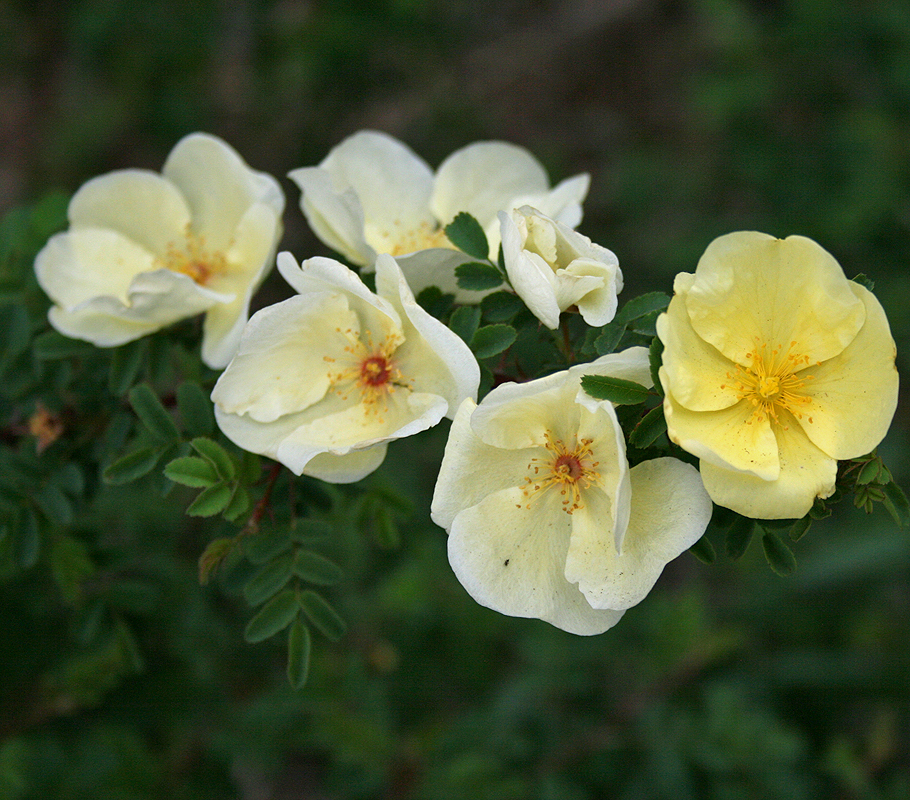
Fruhlingsgold has these lovely large soft yellow blooms with a unusual fragrance.

Harison's Yellow is another early once bloomer. Here it is, totally unpruned, with all the winter killed canes still there.

The Herbalist started blooming a little later. It's a nice fragrant English Rose.

Mary Rose, another English Rose, was planted up near the house which gives it an early start.

Here's a nice branch of Mary Rose:

That's enough for one post. I'll start the next post with roses blooming nearer the end of May.

Monday, November 22, 2010

Backyard Pollinators: Honeybees


The days are getting so short and the nights long right now near Denver, Colorado. It's cold and windy outside, the trees are bare and the gardens give the appearance of being dead.

This is a good time to go through all the pictures taken during the summer months and see what I actually got. During the spring, summer and fall, when the gardens are full of life, I take many pictures of the flowers, plants and bugs. I go through these photo albums multiple times during the winter, each time seeing different things that grab my interest.

Today, the bugs in the photos captured my interest. More specifically, the pollinators. But, since there are many pollinators in my photos, I'm first just going to focus on the most common ones in the pictures - the honeybees.

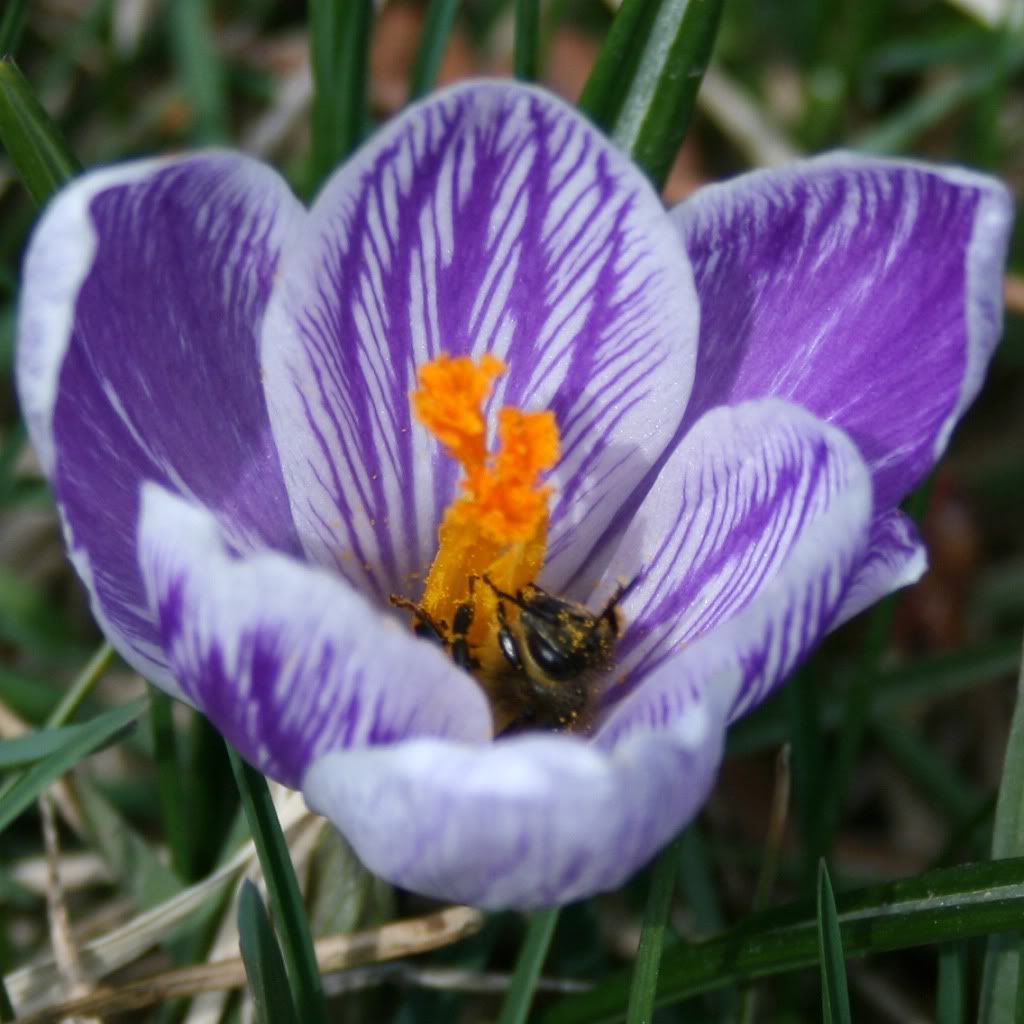
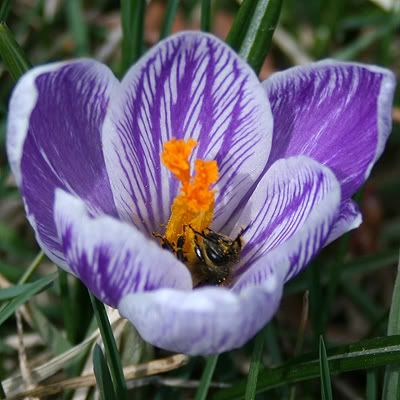
Honeybees seem to really like my yard. Is it because there are flowers blooming constantly from early spring until late fall? I think this is probably so, plus I have multiple water gardens to provide water as well. As soon as there is a crocus blooming in spring, there is a bee in it.

(Clicking on each picture will being up a much larger version of the same image.)


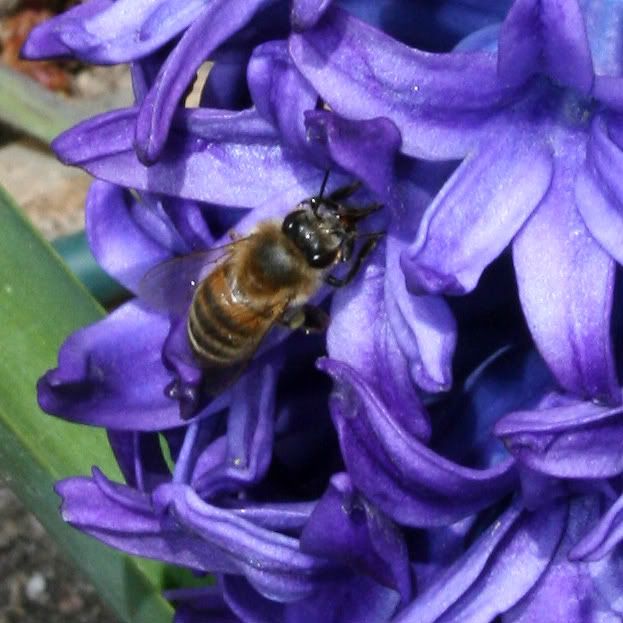
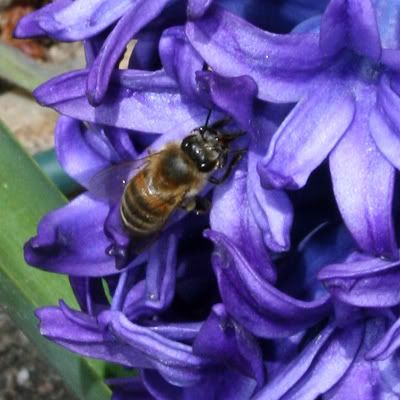
A little later, the hyacinths, tulips, daffodils and other spring bulbs are full of honeybees:

Later in the spring, all the fruit tree bloom and are so full of bees the trees seem to be humming. But sometime after that, the roses start to bloom.
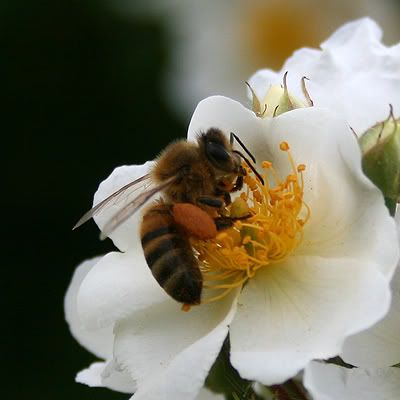

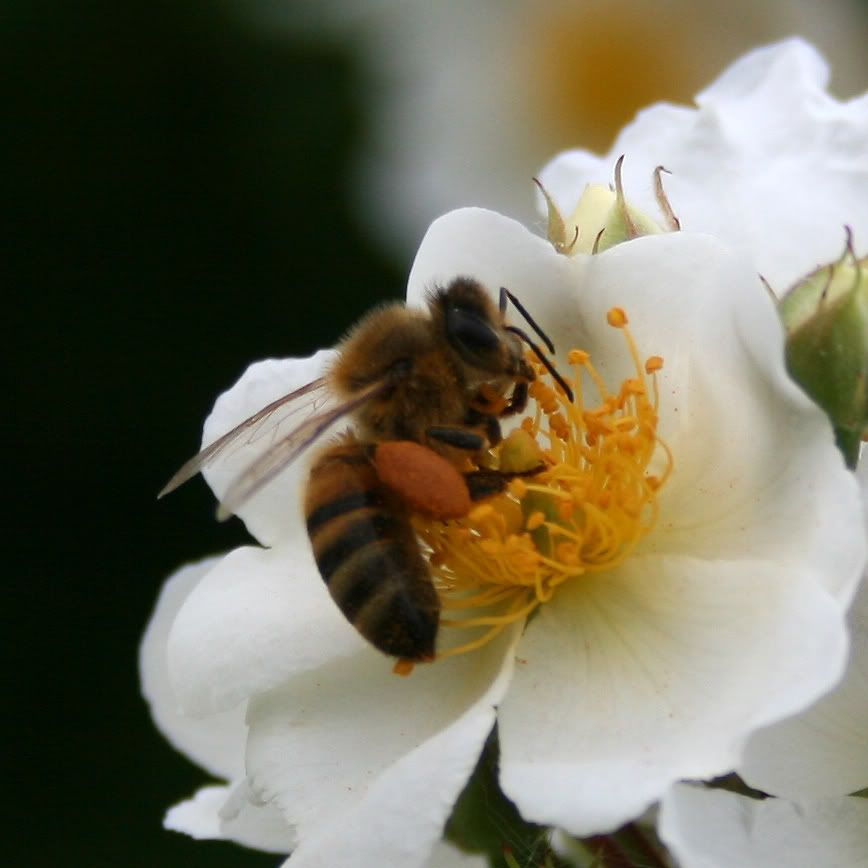
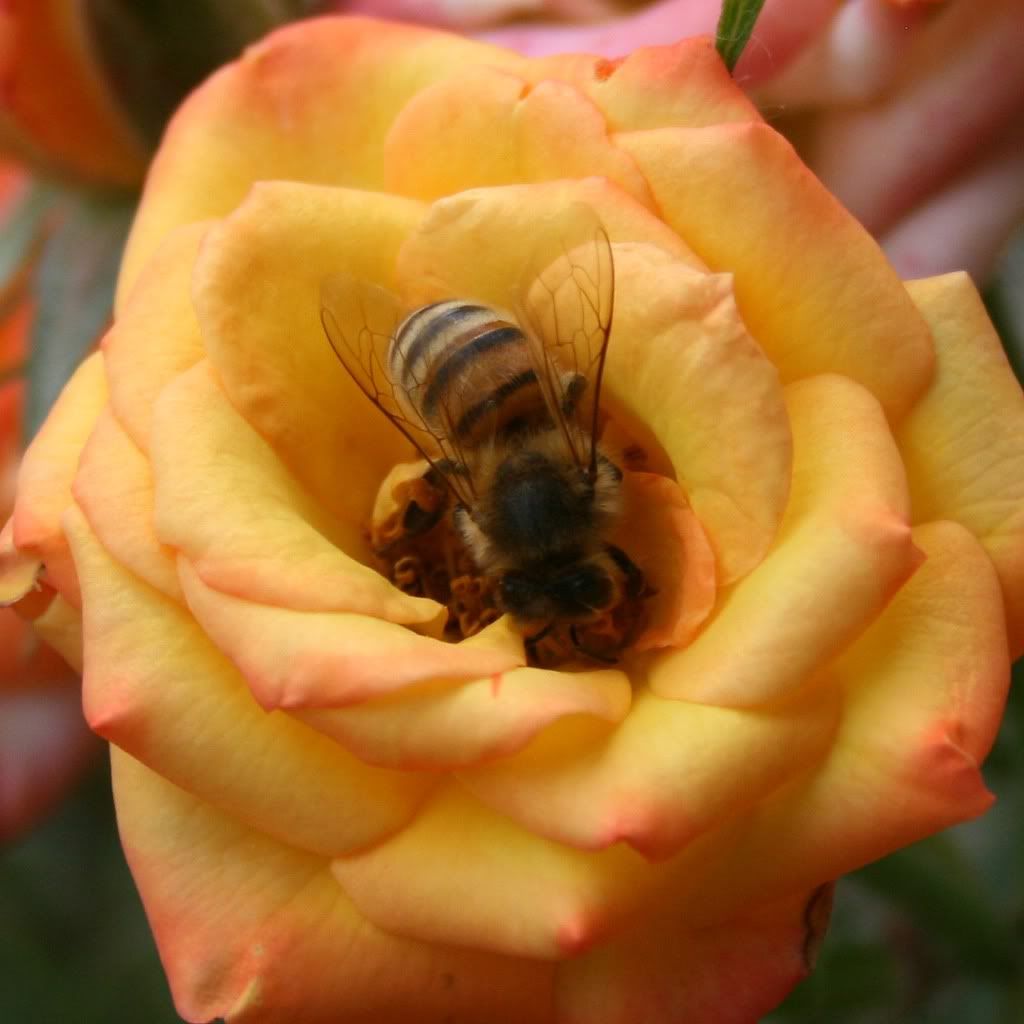
There are over 400 roses in the yard and many thousands of blooms. The above picture is most likely of the rose Darlow's Enigma.

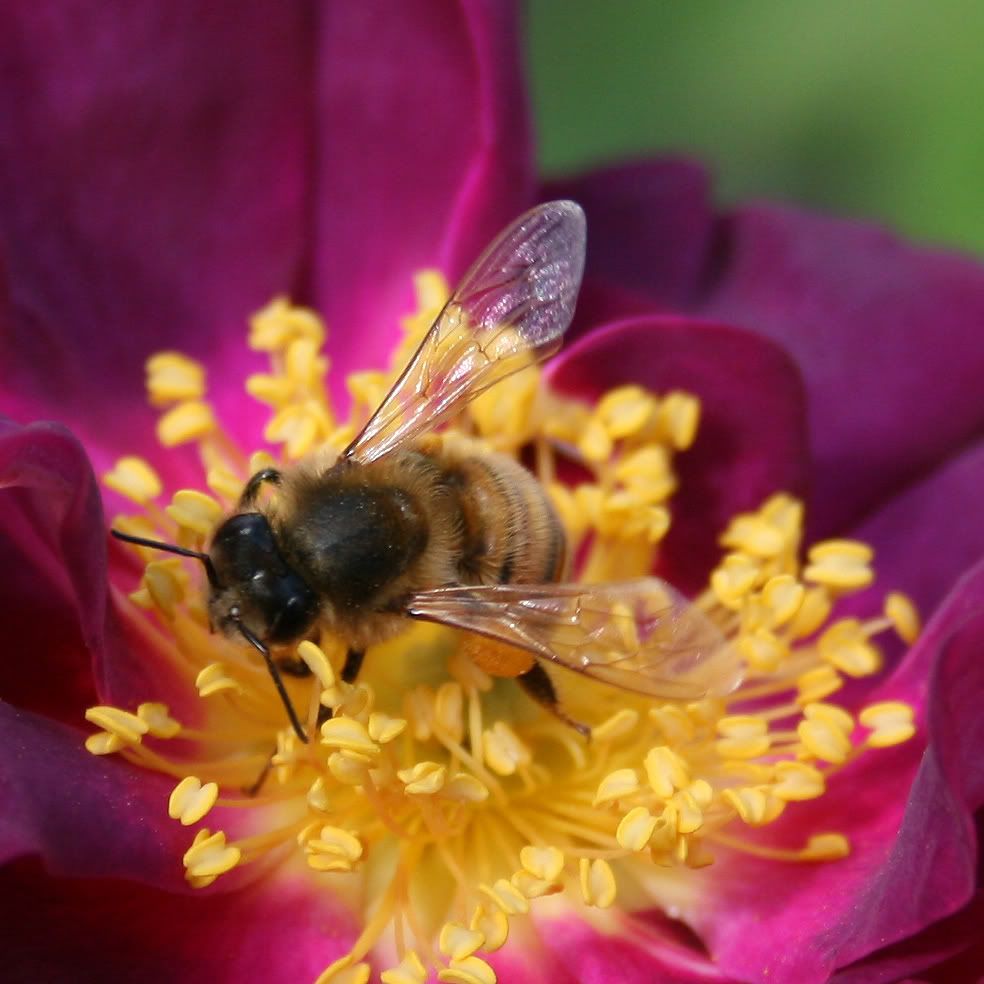
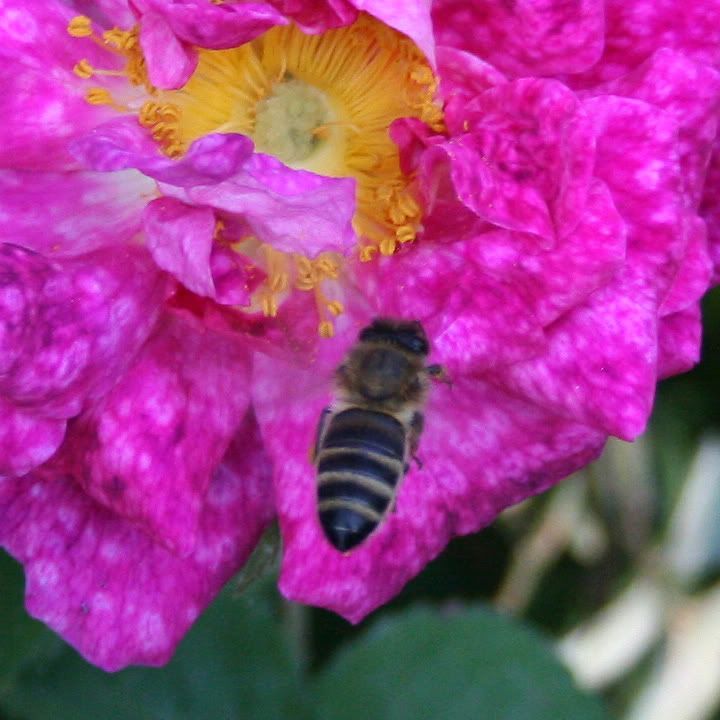
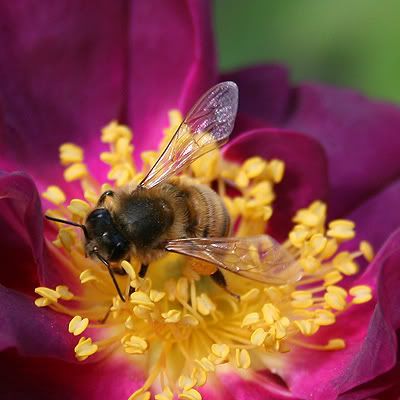
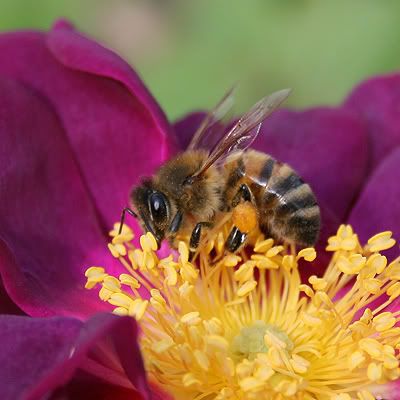
Here is a photo of a bee busy in one of my dark red gallica roses. This is a particularly clear image of the bee, especially in the larger photo where even the hairs on the bee's head, thorax, abdomen, and legs can be seen.

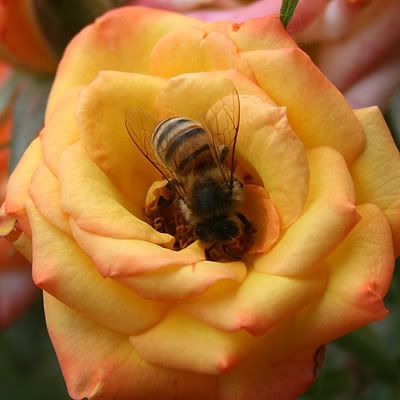
As the summer continues on, the bees search out the blooms on the petite, but repeat blooming miniature roses.

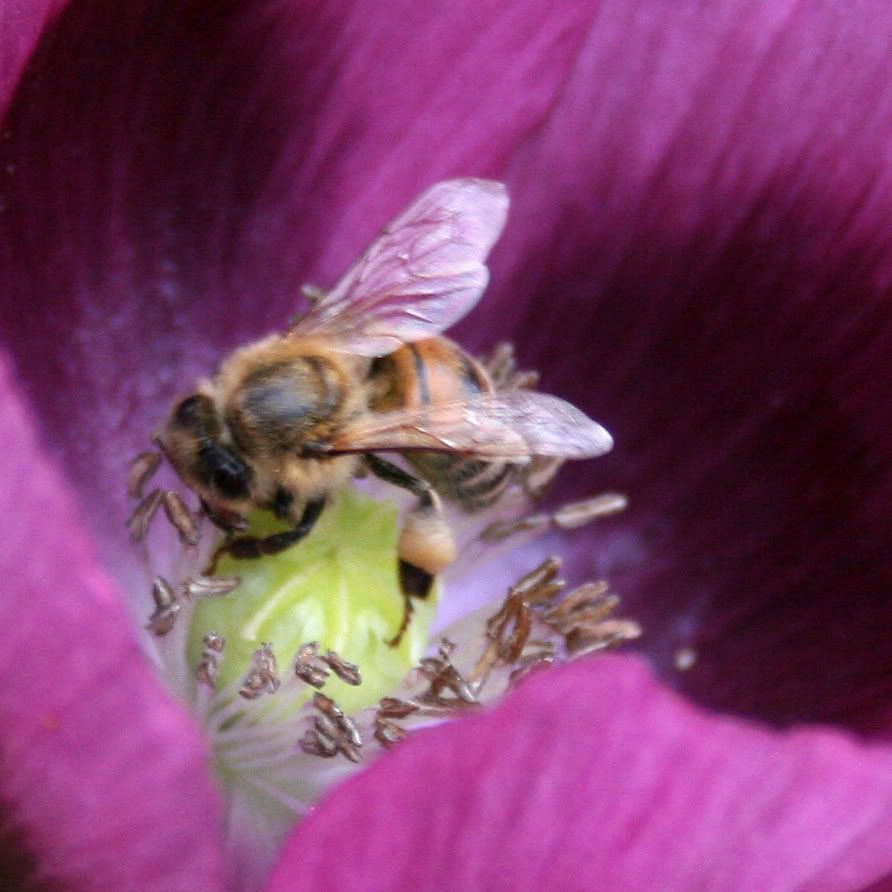
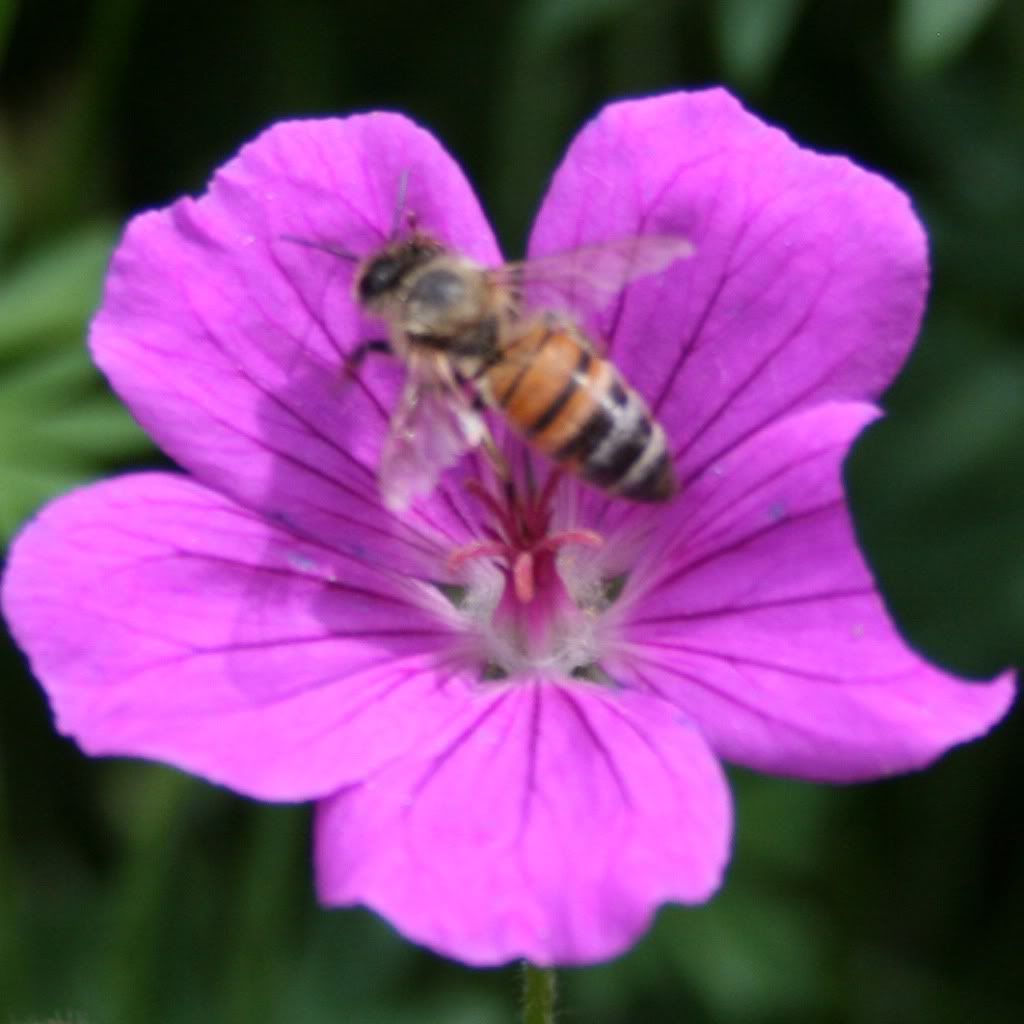
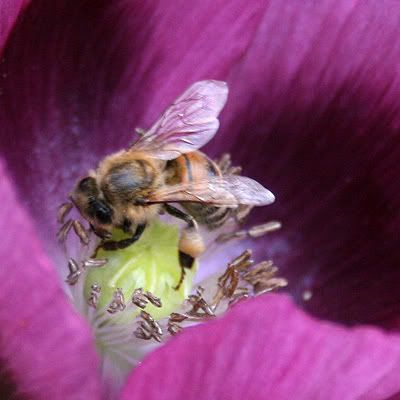
The poppies attract many honeybees.

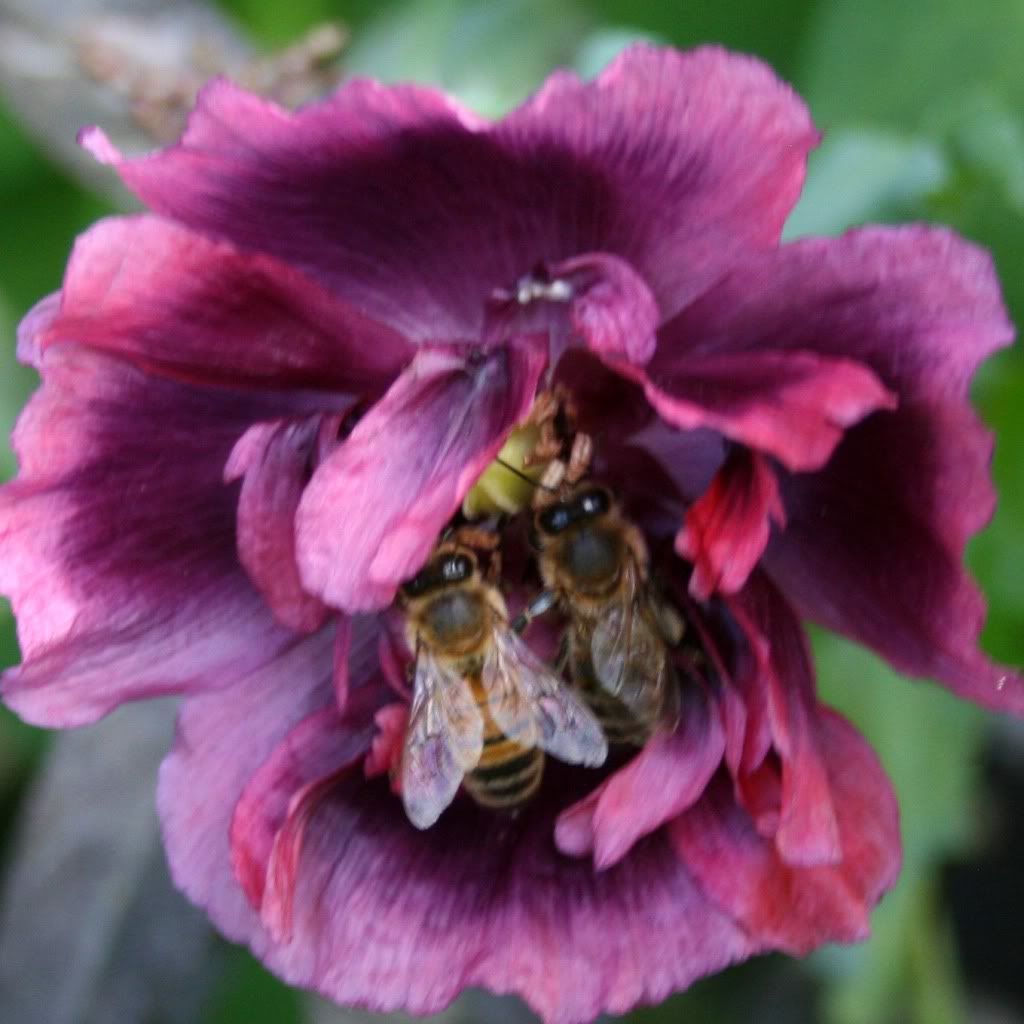
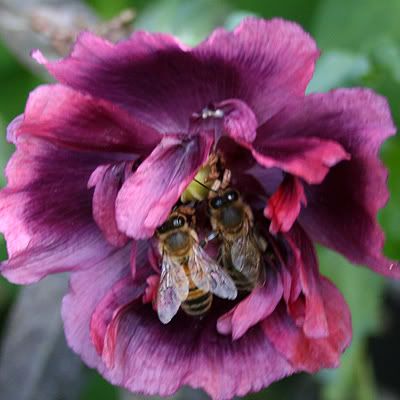
Some share a flower. These two bees in this flower look different to me, although they both spent quite a lot of time in there without any squabbling. Are they from different hives or is one older than the other?

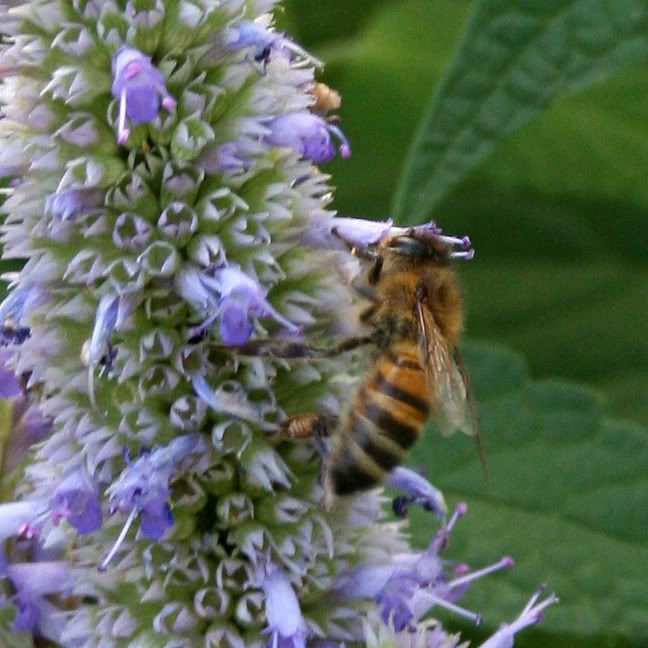
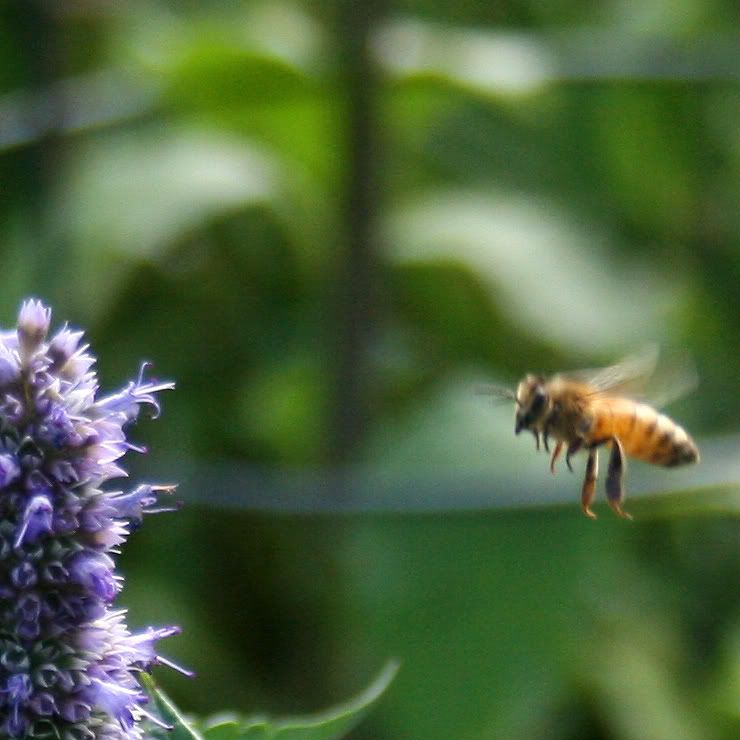
Later in the summer, the anise hyssop, also known as agastache, is buzzing with hundreds of bees. The lavender, daylilies, sunflowers, dahlias, salvias and many other flowers are also thick with bees.
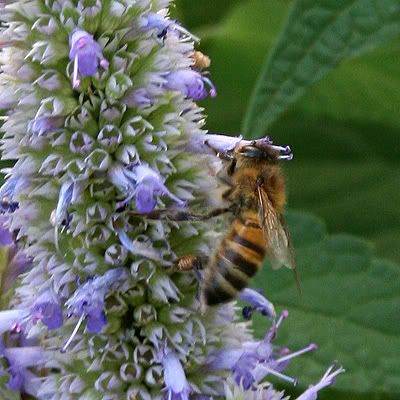
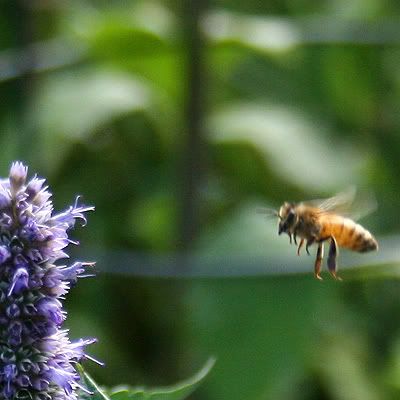
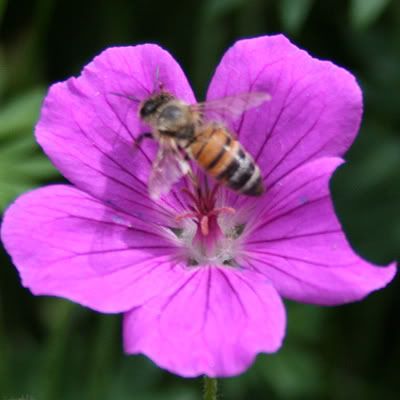


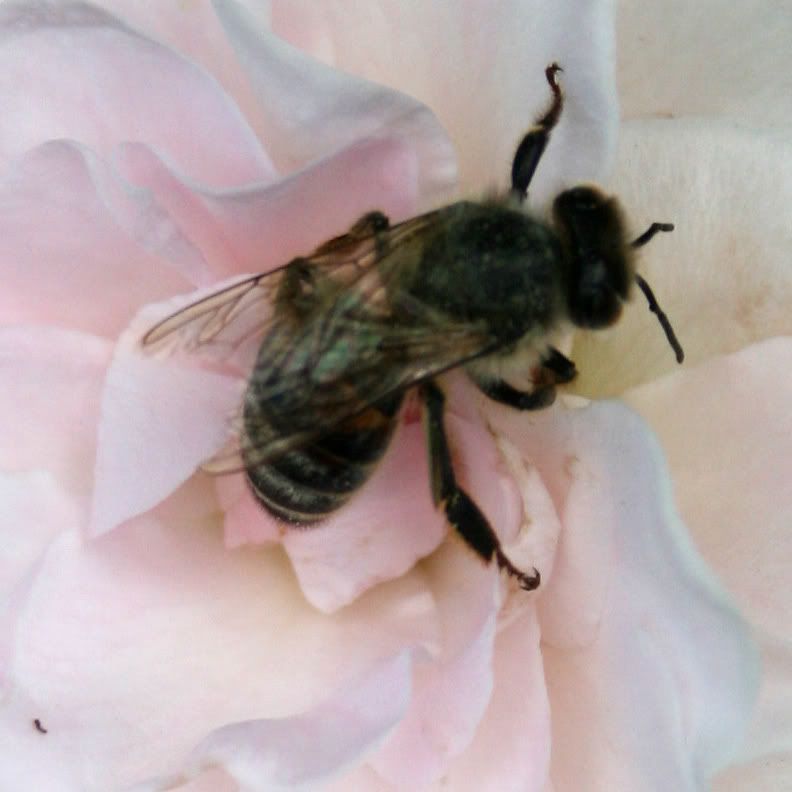
There also seems to be some very dark, or black honeybees visiting the flowers. Are these a different species of bee or just a color variation?
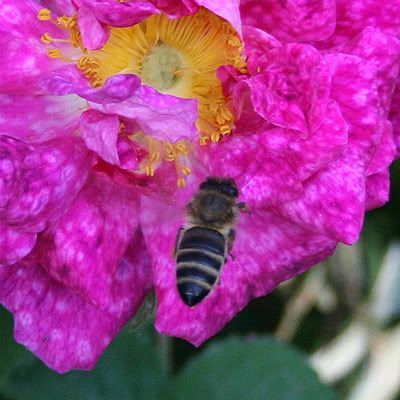


There are bees coming to the gardens into the late fall, drawn to the flowers of the sedums and the last hurrah of the repeat blooming hybrid teas and miniature roses.

All in all, there are a lot of bees in the gardens. Later, I'll post about the native bees and other pollinators in the gardens as there are a lot of them too.

Next spring there may be even more bees in the garden since some bee keeping friends are considering putting some hives out back near the fruit trees.