Wednesday, June 13, 2012

The Roses of 2012

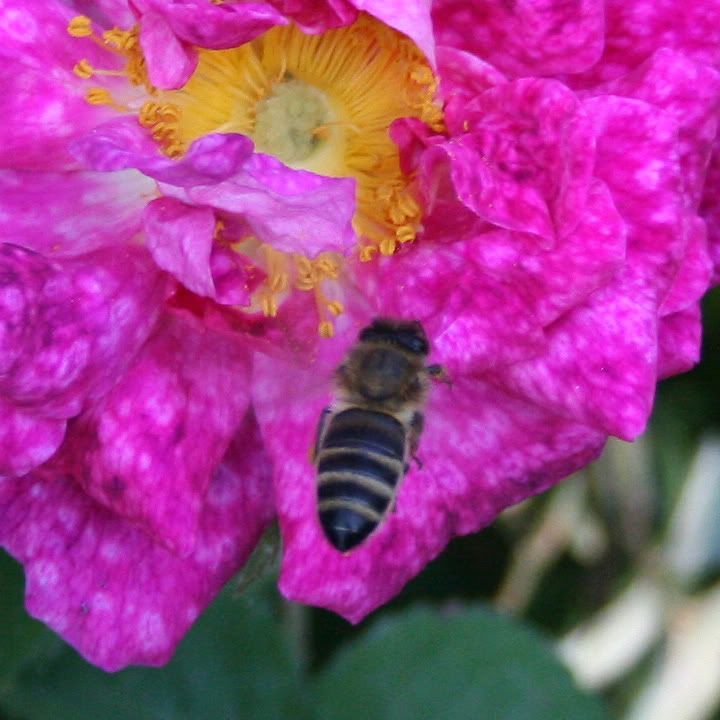
This is a very strange year. The weather was unusually warm in the spring and we didn't get our usual freezes in May. Because of this the roses, which usually peak around summer solstice, peaked around June 1.
They started around May 10. The first to bloom were Father Hugo's Rose, a once bloomer with lovely tiny ferny foliage:

Also blooming this early was Austrian Copper, another once bloomer:

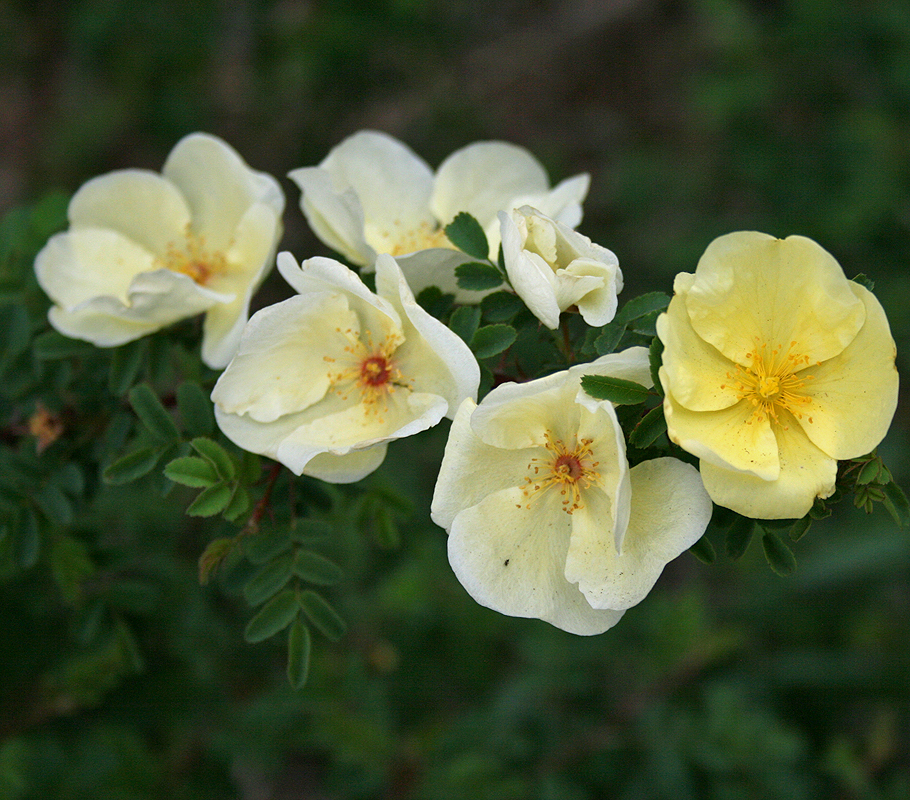
Fruhlingsgold has these lovely large soft yellow blooms with a unusual fragrance.

Harison's Yellow is another early once bloomer. Here it is, totally unpruned, with all the winter killed canes still there.

The Herbalist started blooming a little later. It's a nice fragrant English Rose.

Mary Rose, another English Rose, was planted up near the house which gives it an early start.

Here's a nice branch of Mary Rose:

That's enough for one post. I'll start the next post with roses blooming nearer the end of May.

Monday, June 11, 2012

Bee Hives in the Yard

Back in late May a local beekeeper advertised on Denver's Craigslist that he was looking for places to put his hives in exchange for some of the honey. I've wanted some hives in my yard for some time now so I jumped at the chance and contacted him. Greg, of  Dakota Bees (Dakotabees.com) came out to check out the yard and found lots of flowering plants, plus water gardens that would provide water for the bees so he said he would be happy to put some hives here.  He removes wild hives from people's homes and also captures swarms and puts them into hives.
The following week on May 26 the little yellow hive in the front of the picture above show up with a newly captured swarm inside. He showed us how to make sugar water for the bees to give them a start until they have made comb inside the hive. We took a video of them their first morning:
Hive video
On June 3, two more hives showed up. The first one contained bees from a wild hive removal from a home and the second one contained a very large swarm. June 4, another hive showed up with a medium sized swarm in it. June 8, the fifth hive showed up with another wild hive removal from a home.
I hope the bees do well in their new home.

Saturday, January 1, 2011

January 1, 2011 - Frakus Emerges


The first day of the year was cold. It never got above freezing and the lows were around zero degrees F. Our first real snow of the season fell two days earlier. Despite the cold, the snow slowly eroded away through a process known as sublimation. This is a common process here near Denver, Colorado, where the dry air and sun can cause the snow to escape it's solid state and go into the air without going through a liquid phase.


As the snow eroded around our small pond, Frakus, our devil frog from StoneCraft Arts emerged to show his lovely grin.

Friday, December 31, 2010

2011 Seeds Ordered So Far


Here's a list of seeds ordered so far:

From Select Seeds:

Morning Glory 'Scarlett O'Hara
Poppy 'Danish Flag'
Poppy 'Heirloom'
Poppy 'Imperial Pink'
Poppy 'Ladybird'
Poppy 'Lauren's Grape'
Poppy--Peony Black
Sweet Pea 'Chatsworth'
Sweet Pea 'Elegance French Blue'
Sweet Pea 'Mollie Rilestone'
Venus's Looking Glass

From Seeds of Change:

Orange Temple Bells Celosia
Texas Hummingbird Sage
Goldy Double Sunflower
Tiger's Eye Mix Sunflower
Belstar F-1 Broccoli
Corno Di Toro Pepper
Stupice Tomato
Famosa F-1 Cabbage

From Thomson and Morgan:

Sweet Pea Ballerina Blue
Sweet Pea Tickled Pink
Sweet Pea Apricot Sprite
Chrysanthemum - carinatum Sunset
Sweet Pea Zorija Rose
Sweet Pea Elegant Ladies
Salvia - patens
Pepper Gypsy Hybrid
Tomato Sungold

From Burpee:

Sweet Pea, Spanish Dancer
Corn, Ruby Queen
Pea Super Sugar Snap
Pepper Jalapeno False Alarm
Tomato Super Sweet 100
Tomato Bloody Butcher
Tomato Better Boy
Morning Glory Candy Pink

Thursday, December 30, 2010

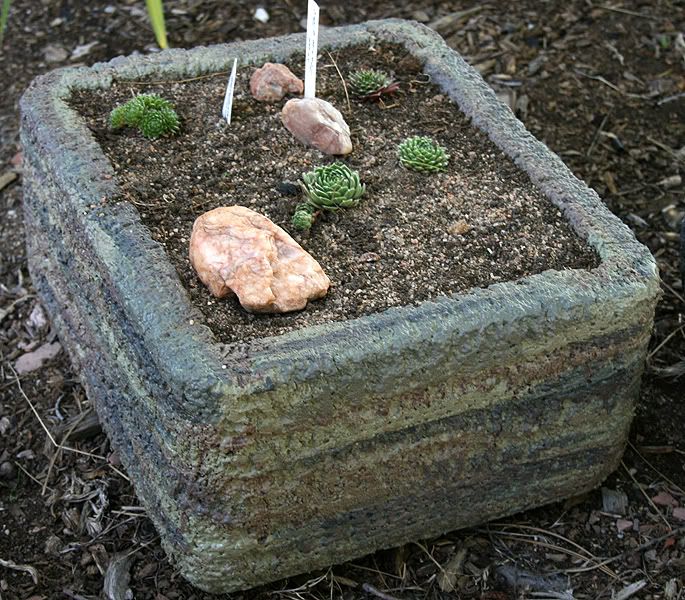
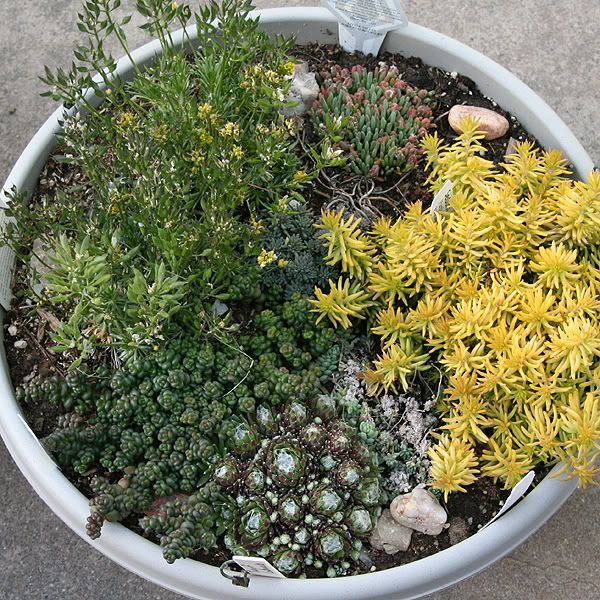
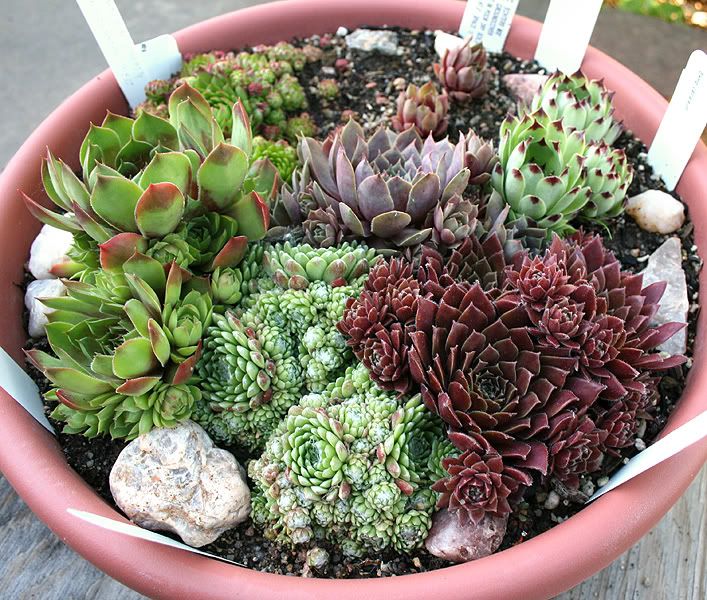
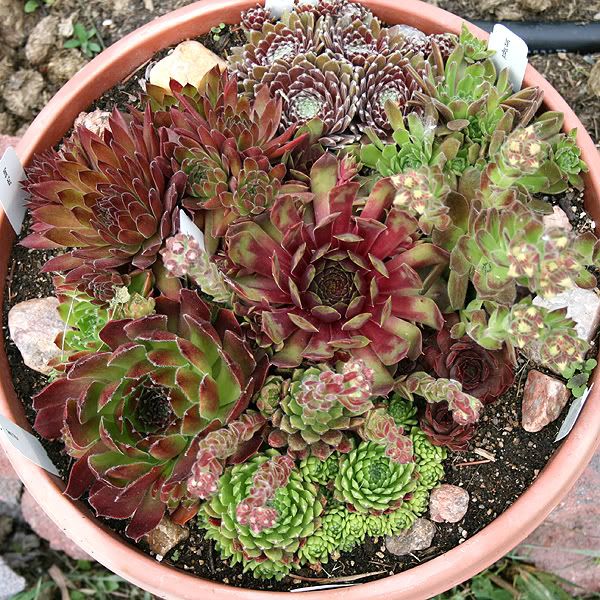
Sempervivums, Sedums and Hypertufa Revisited


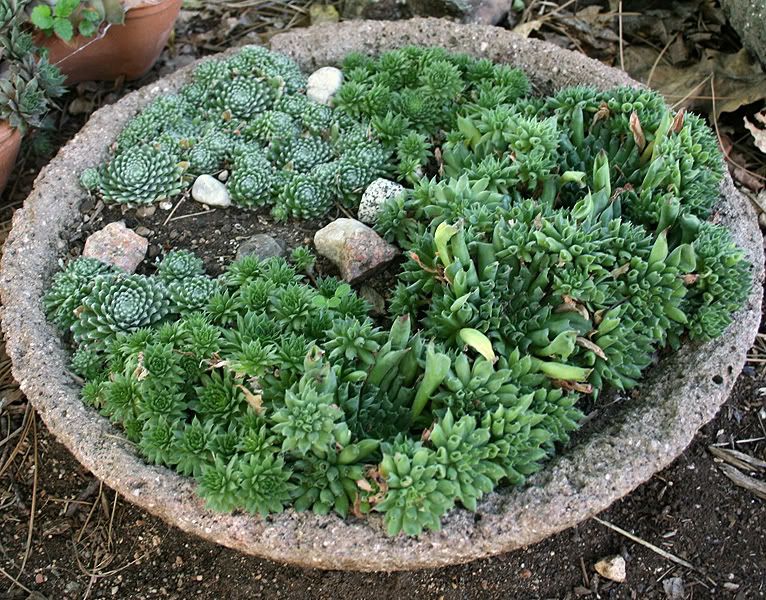
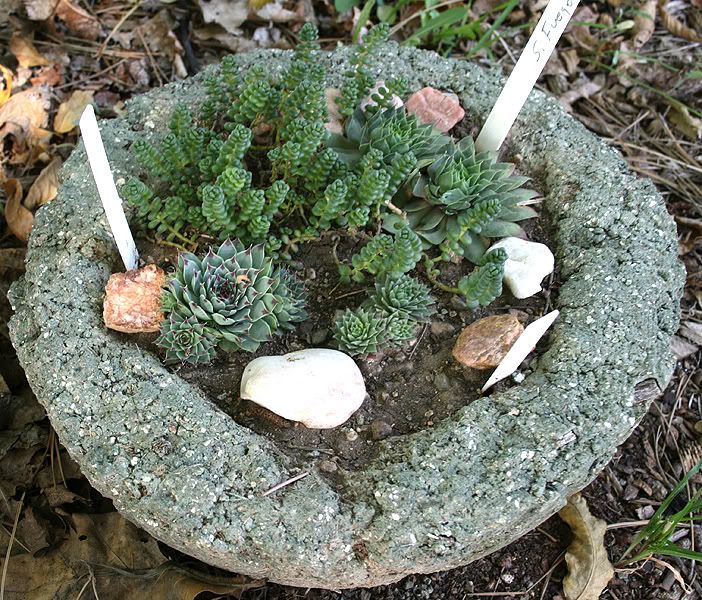
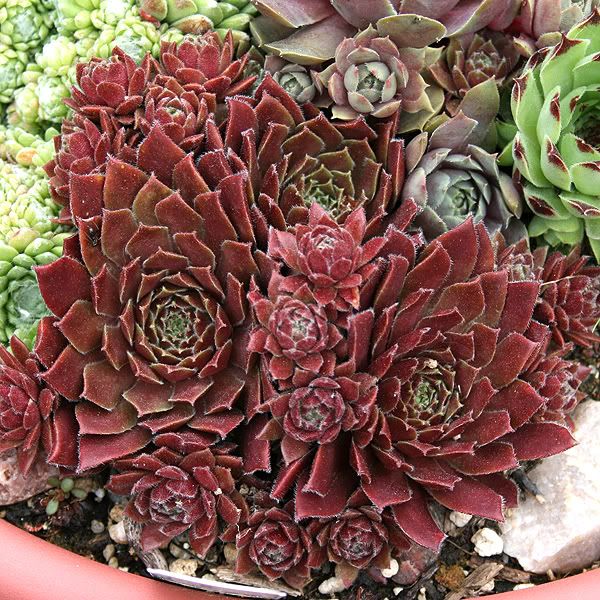
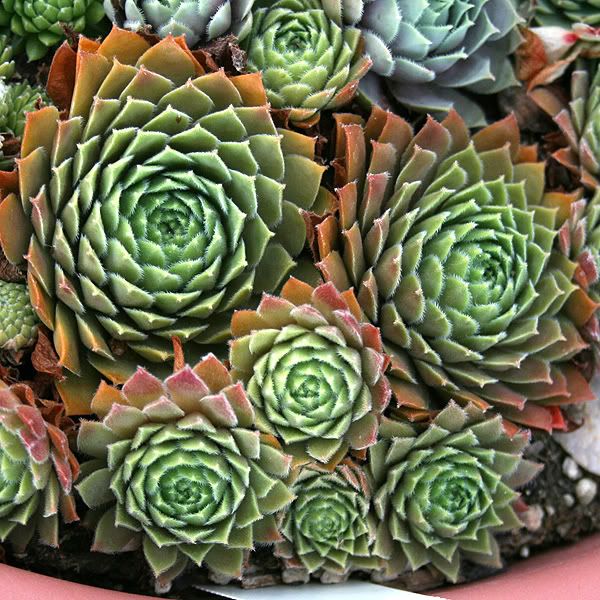
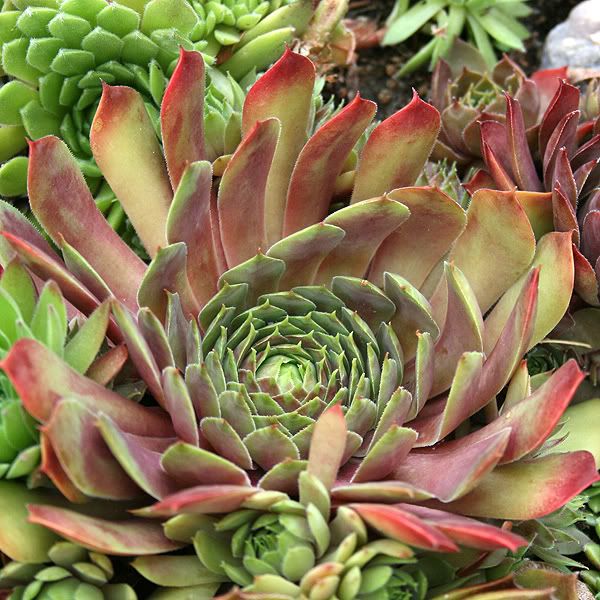
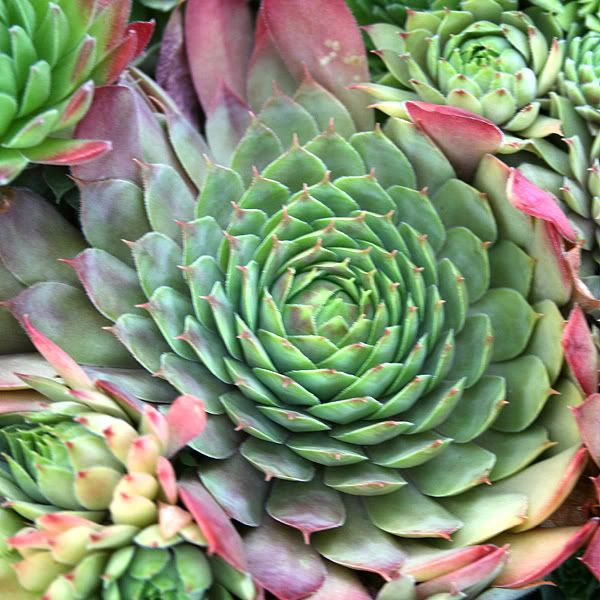
A little over a year ago I posted about some recently acquired hypertufa pots and some plants to put in them. Well, not only did the plants I bought do well, but I went and bought some more pots from Fox Meadow up in Fort Collins, Colorado and then went hog wild buying plants. It didn't help that Timberline Gardens, a local nursery in Arvada, Colorado, has an unbelievably large variety of sedum and sempervivum. This variety, combined with Timberline's discount table where many cool plants can be had for only a $1, cause me to go crazy and buy way more plants than I had pots or gardens for. I guess I'll just have to get more pots and dig up more of the back yard.
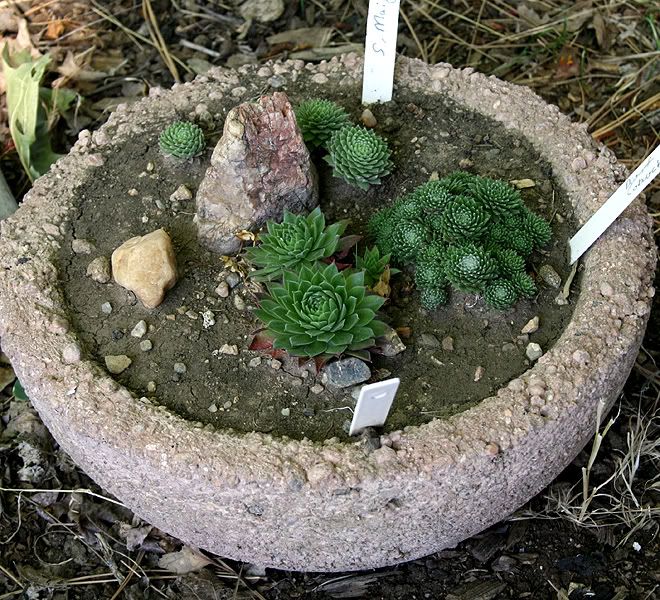
The picture above shows the pot I pictured in the 2009, only all potted up with some sedums, sempervivums, jovibarba and a tiny dwarf ice plant. The pot below is my old, home made hypertufa pot filled with sempervivum Oddity, S. funckii and S. arachnoidium. Click on picture for a much bigger image:


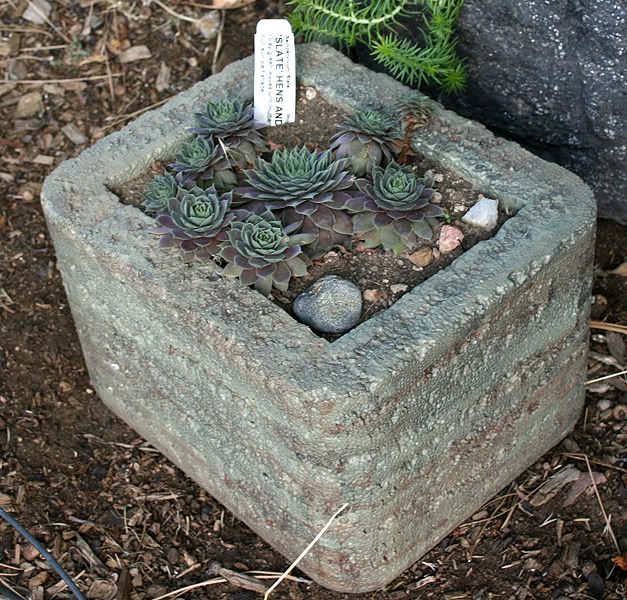
The other new hypertufa pots from Fox Meadow are shown below, all planted up. Click on the pic for a bigger image:


Plus, there's a new pot made from left over Quikcrete and a bit of cement colorant:


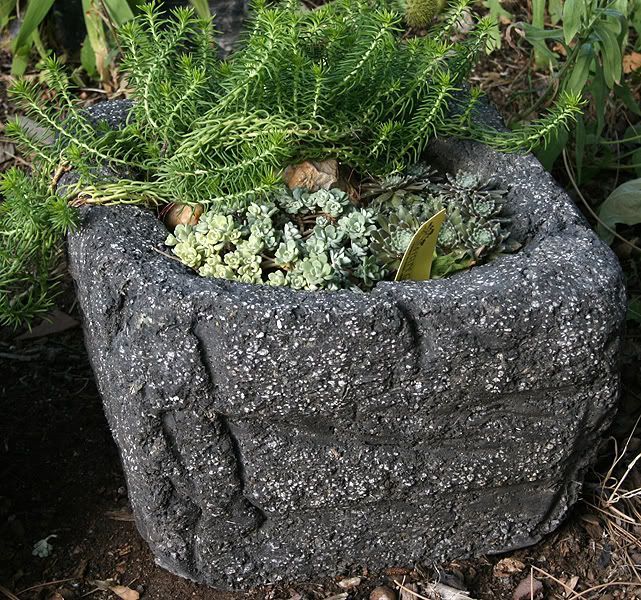
And then there faux hypertufa, or as I like to call it, faux faux Tufa since hypertufa is meant to simulate tufa, which is a naturally occurring rock. These pots are made of Styrofoam boxes that have been roughed up and painted with leftover house paint and some acrylics.


All of the pots, whether they are hypertufa or styrofoam have plenty of drainage holes in the bottom.

The plastic pots planted up with sedums, iceplants and sempervivum in the spring filled in nicely:


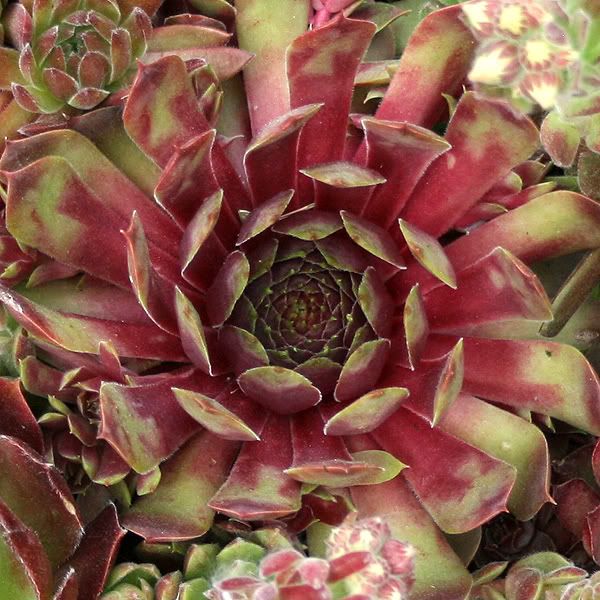
It was fun the see the radical color and appearance change in the sempervivum throughout the year. These pictures show the color change Sempervivum Calcerum Pink Pearl went through from May to July (click for larger pics):


These pictures show the range of colors S. Spherette went through from May to September:


Sempervivum Fuego also undergoes a radical color change. Here it is from April to September:


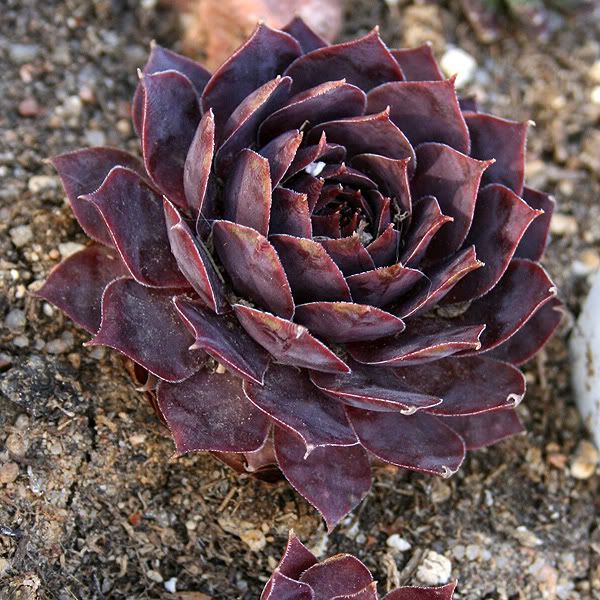
As winter arrived, some became an intense shade of red, while others became more green. Some changed from blue green to purple. Some stayed pretty much the same. I have lots more pictures here.

Tuesday, December 7, 2010

Shepherd's Pie


Now that winter is here, we make more suppers in the oven. One that my spouse makes is Sheperd's Pie. Traditionally, it's made with ground lamb, but we don't often have ground lamb so we use ground beef instead.

Ingredients:
1 pound lean ground beef - we use 93% lean
2 eggs
1 cup oats
1 cup milk
1/2 cup barbecue sauce
1 teaspoon Better than Bullion
onion

cheddar cheese
enough mashed potatoes to cover the top

Stir the beef eggs, oats, milk barbecue sauce, bullion and onion all together like you would a meatloaf. Put this in the bottom of a 9 inch glass pie plate. Cover with a layer of cheddar cheese slices. Cover this with enough mashed potatoes to cover the top. Usually this is 6 medium pototatoes, smashed with some milk and a couple tablespoons of butter. Bake at 400 for 30 minutes, then reduce temperature to 300 and bake another 15 minutes.

This year we had some roasted sweet peppers and put a layer of those between the meat and cheese. That was excellent!

This feeds six people.

Monday, November 22, 2010

Backyard Pollinators: Honeybees


The days are getting so short and the nights long right now near Denver, Colorado. It's cold and windy outside, the trees are bare and the gardens give the appearance of being dead.

This is a good time to go through all the pictures taken during the summer months and see what I actually got. During the spring, summer and fall, when the gardens are full of life, I take many pictures of the flowers, plants and bugs. I go through these photo albums multiple times during the winter, each time seeing different things that grab my interest.

Today, the bugs in the photos captured my interest. More specifically, the pollinators. But, since there are many pollinators in my photos, I'm first just going to focus on the most common ones in the pictures - the honeybees.

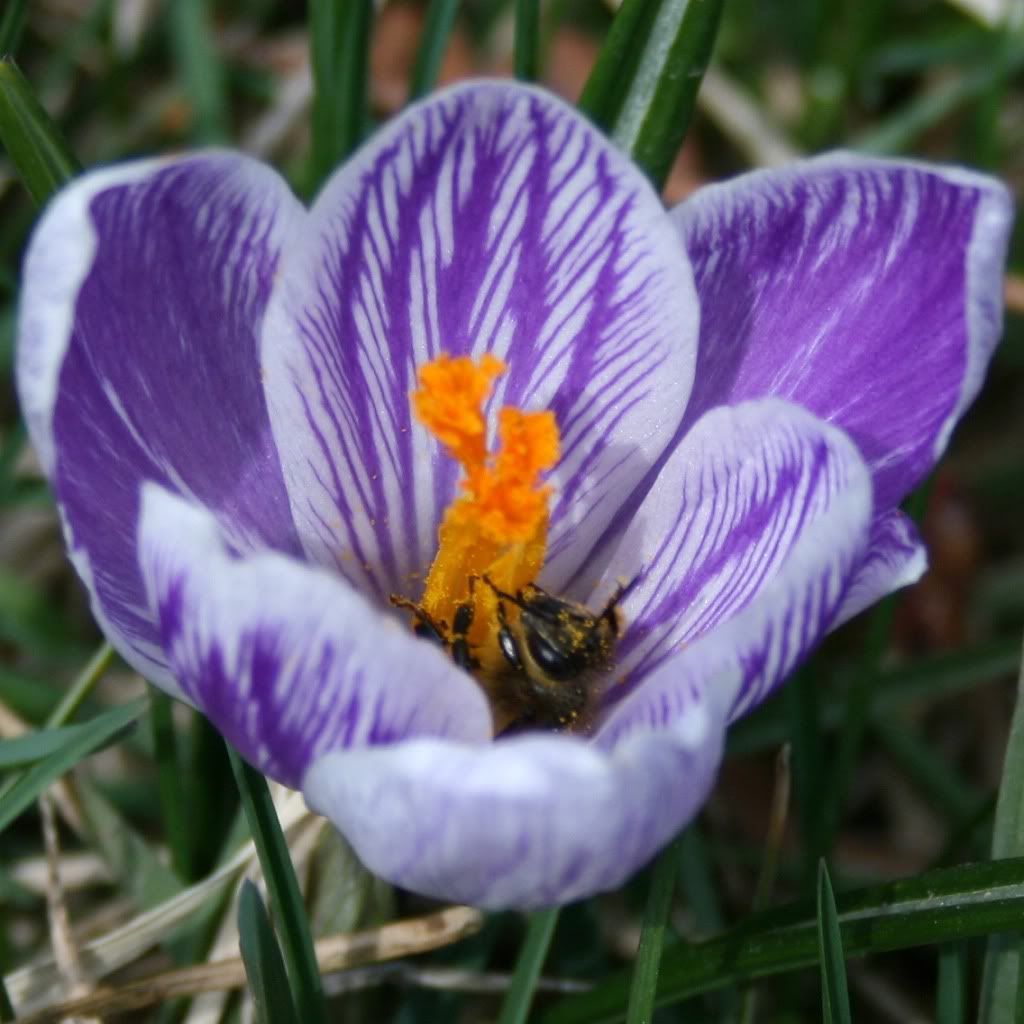
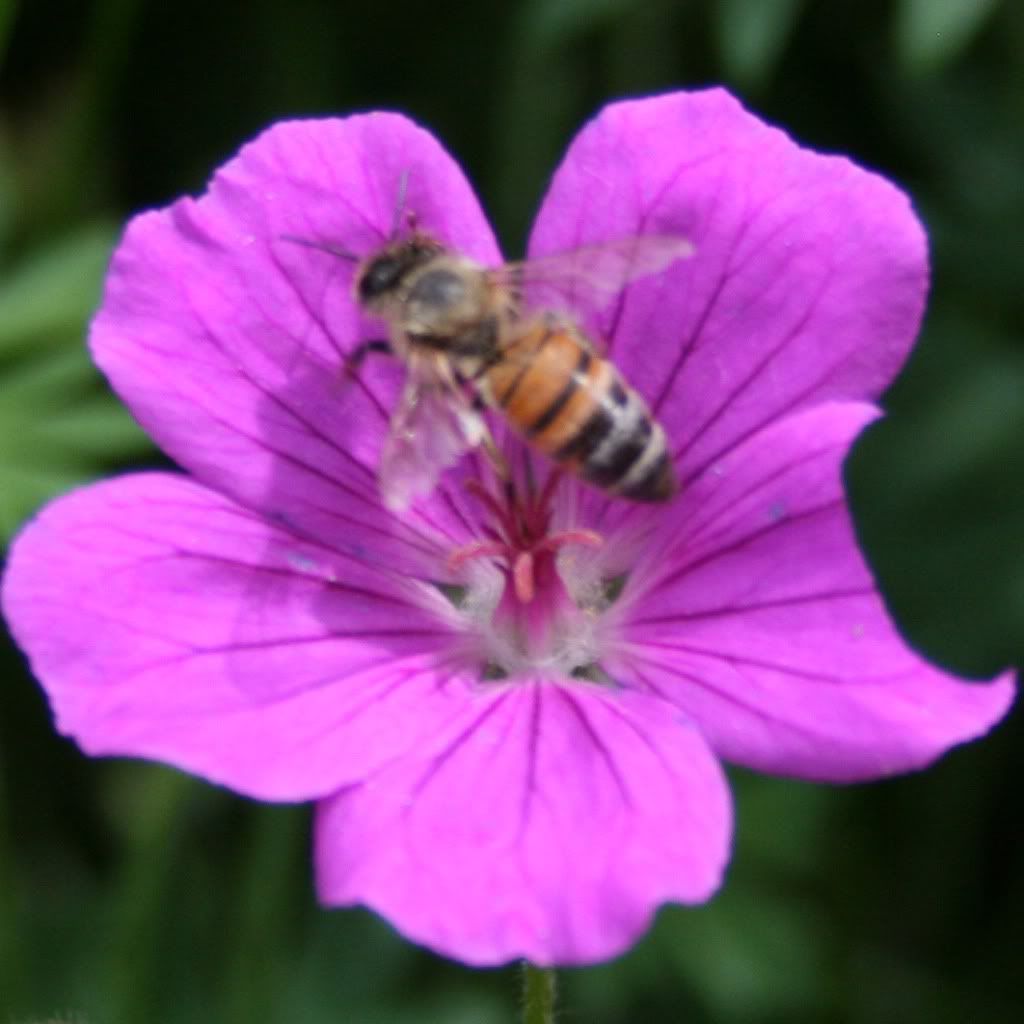
Honeybees seem to really like my yard. Is it because there are flowers blooming constantly from early spring until late fall? I think this is probably so, plus I have multiple water gardens to provide water as well. As soon as there is a crocus blooming in spring, there is a bee in it.

(Clicking on each picture will being up a much larger version of the same image.)
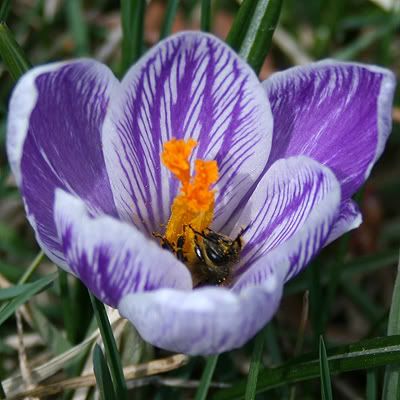


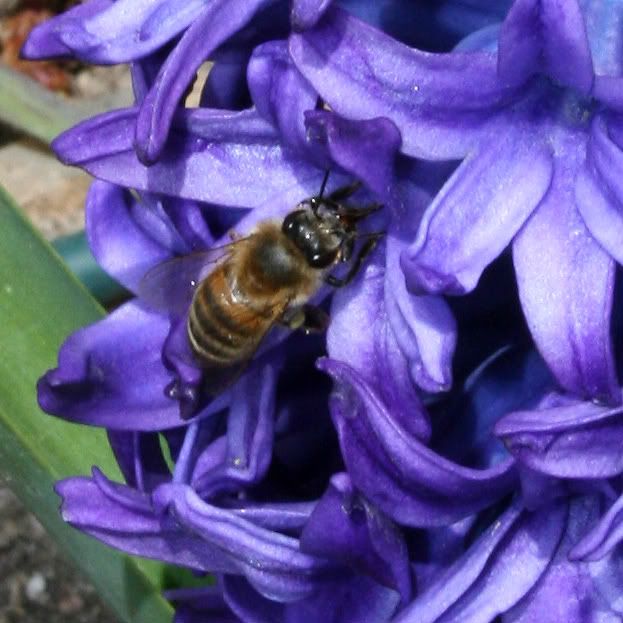
A little later, the hyacinths, tulips, daffodils and other spring bulbs are full of honeybees:
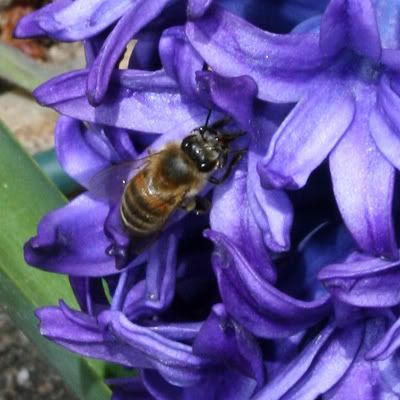

Later in the spring, all the fruit tree bloom and are so full of bees the trees seem to be humming. But sometime after that, the roses start to bloom.
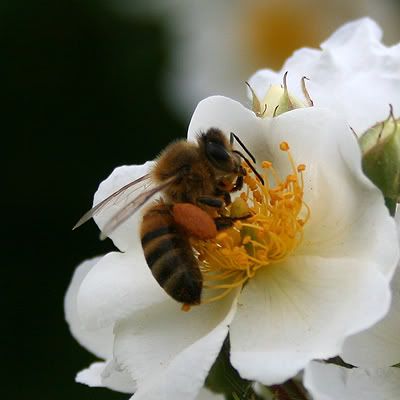

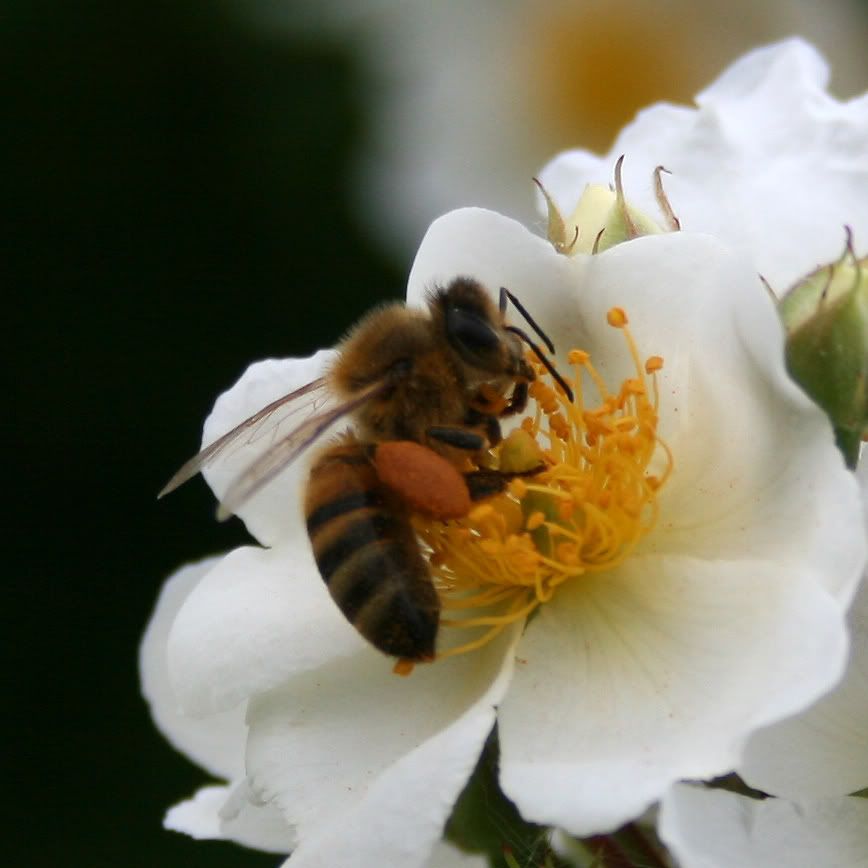
There are over 400 roses in the yard and many thousands of blooms. The above picture is most likely of the rose Darlow's Enigma.

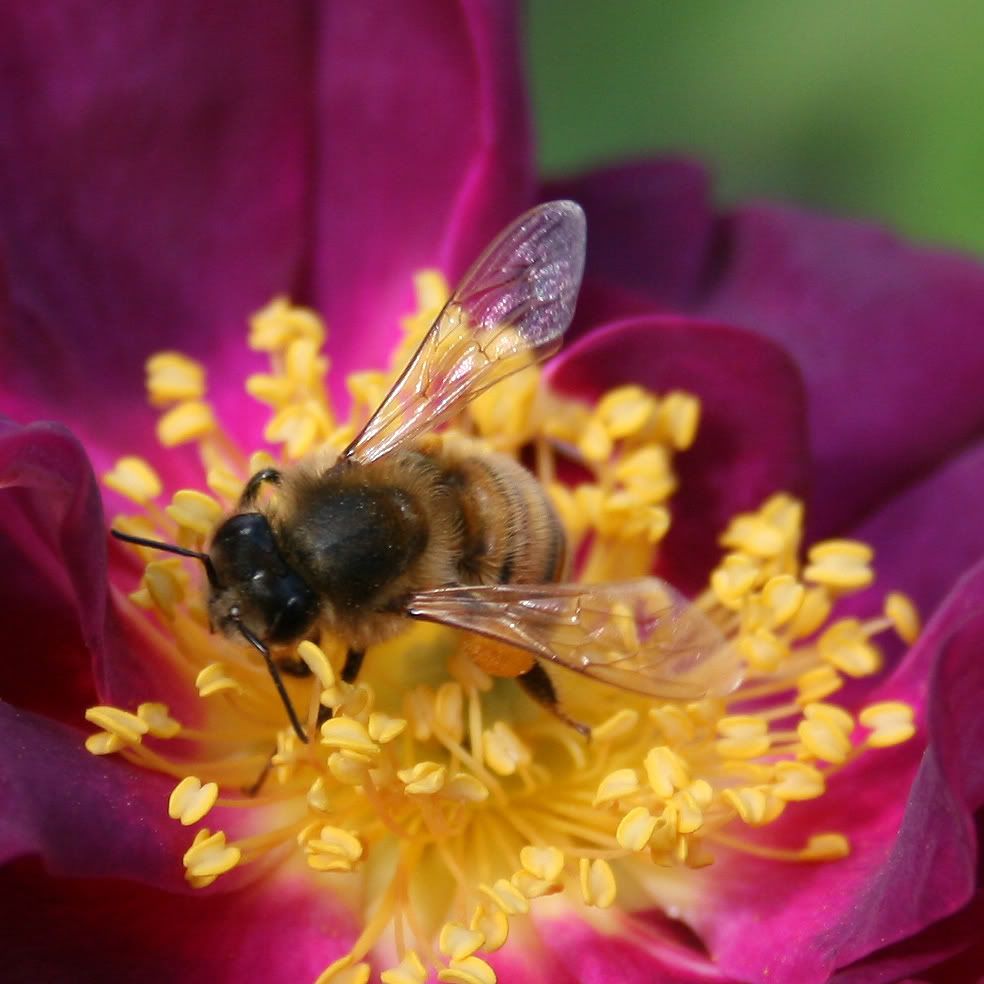
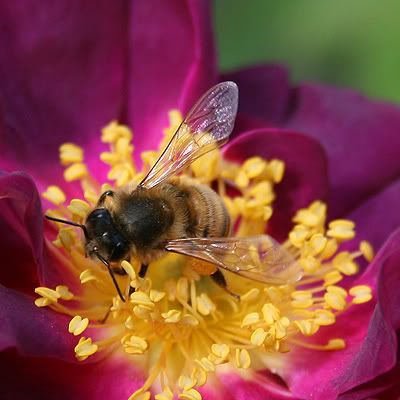
Here is a photo of a bee busy in one of my dark red gallica roses. This is a particularly clear image of the bee, especially in the larger photo where even the hairs on the bee's head, thorax, abdomen, and legs can be seen.
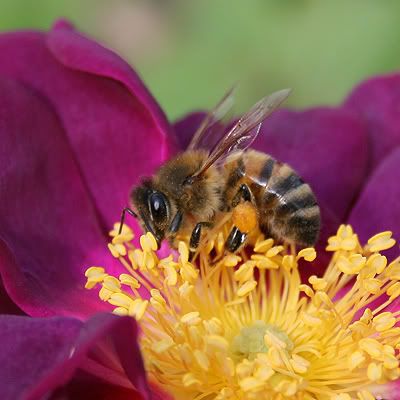

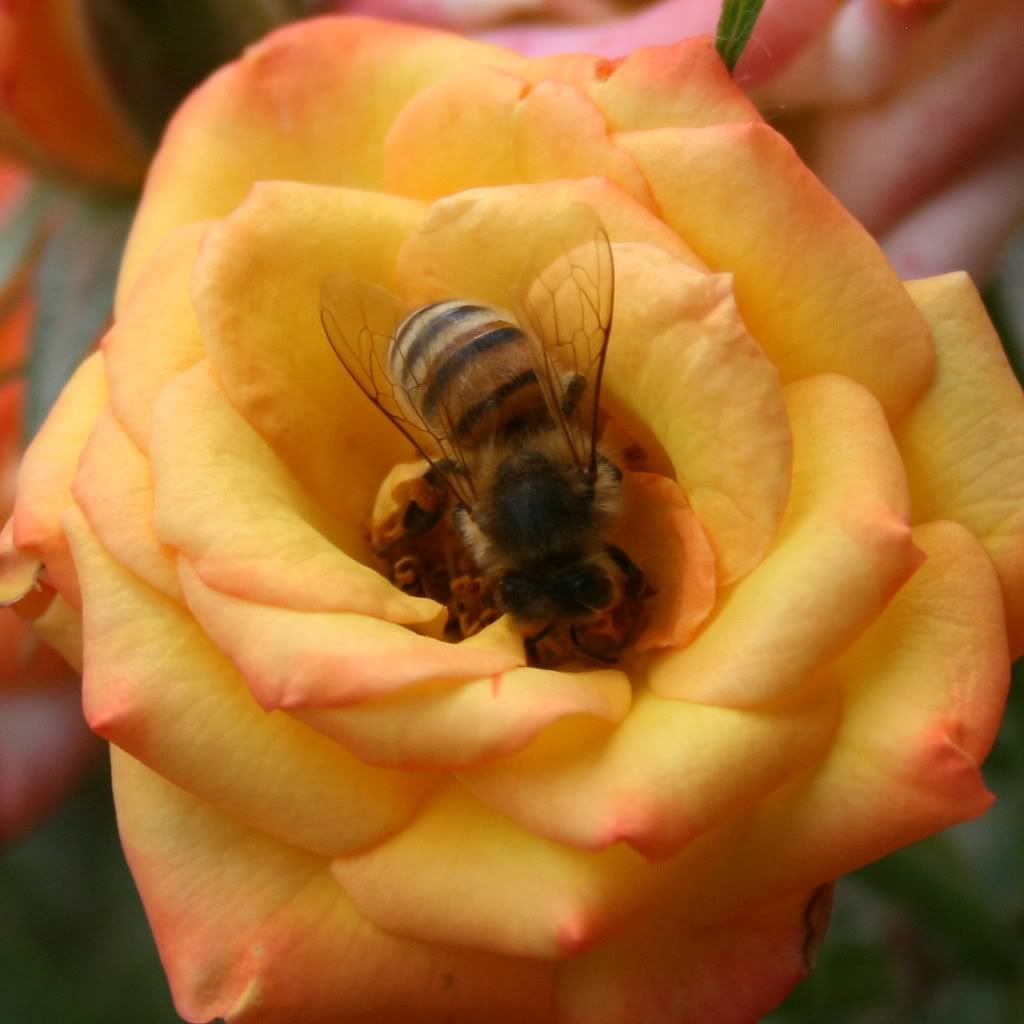
As the summer continues on, the bees search out the blooms on the petite, but repeat blooming miniature roses.
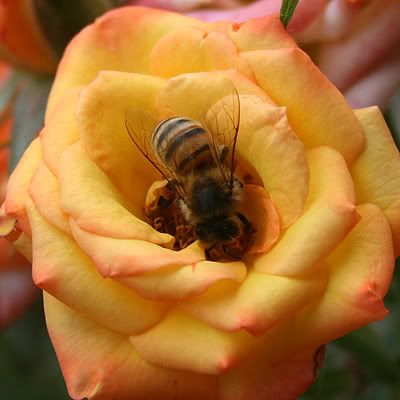

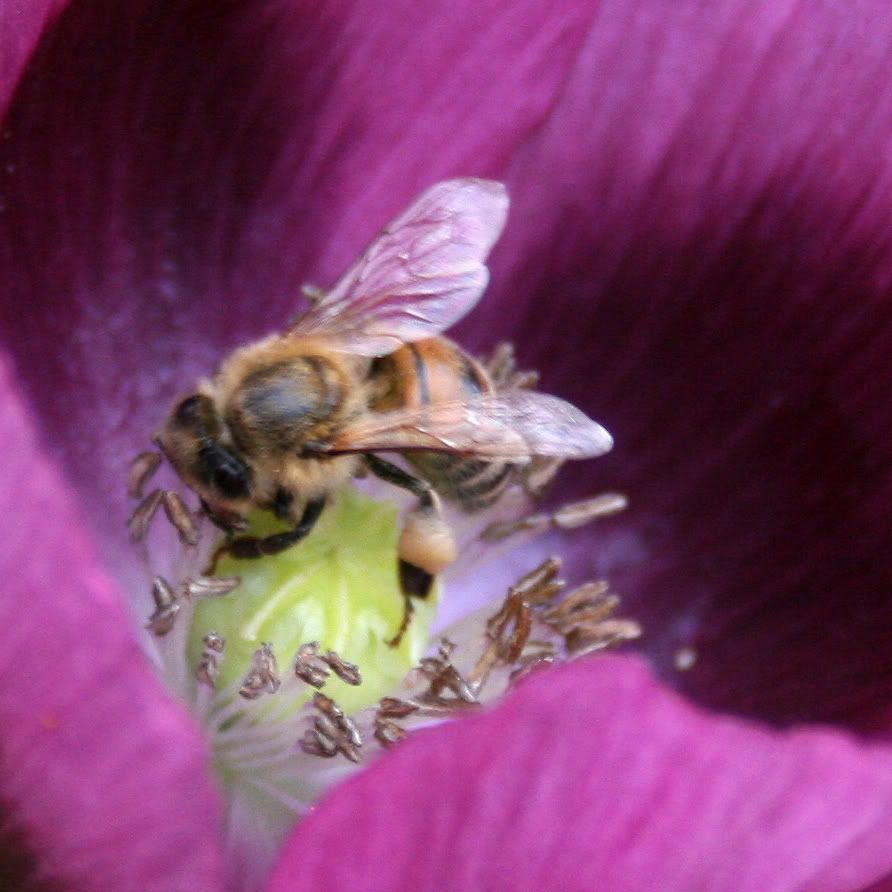
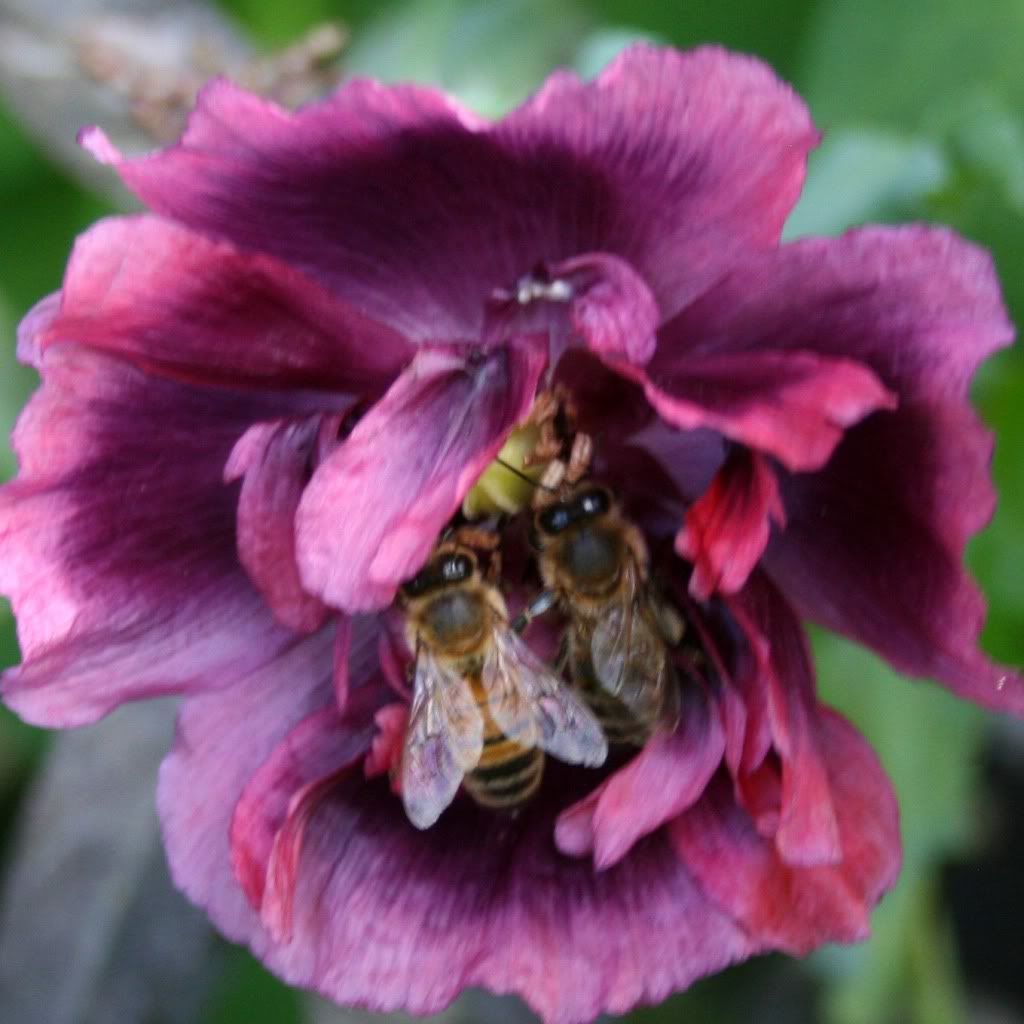
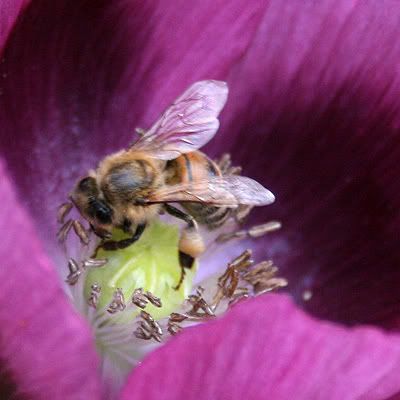
The poppies attract many honeybees.

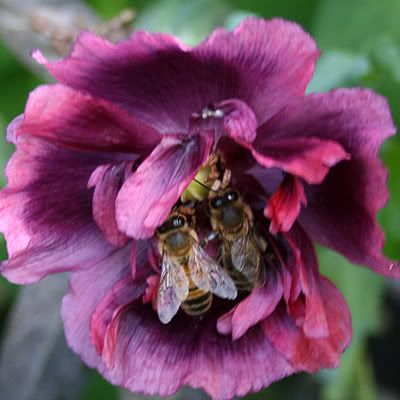
Some share a flower. These two bees in this flower look different to me, although they both spent quite a lot of time in there without any squabbling. Are they from different hives or is one older than the other?

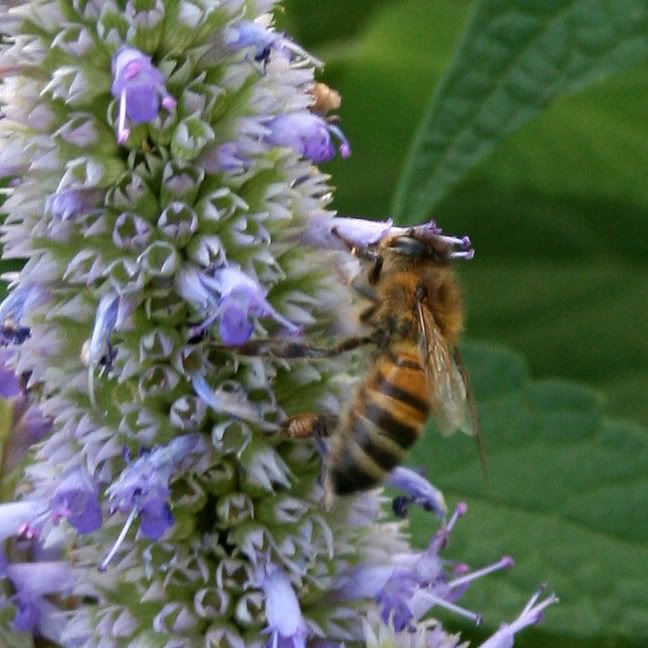
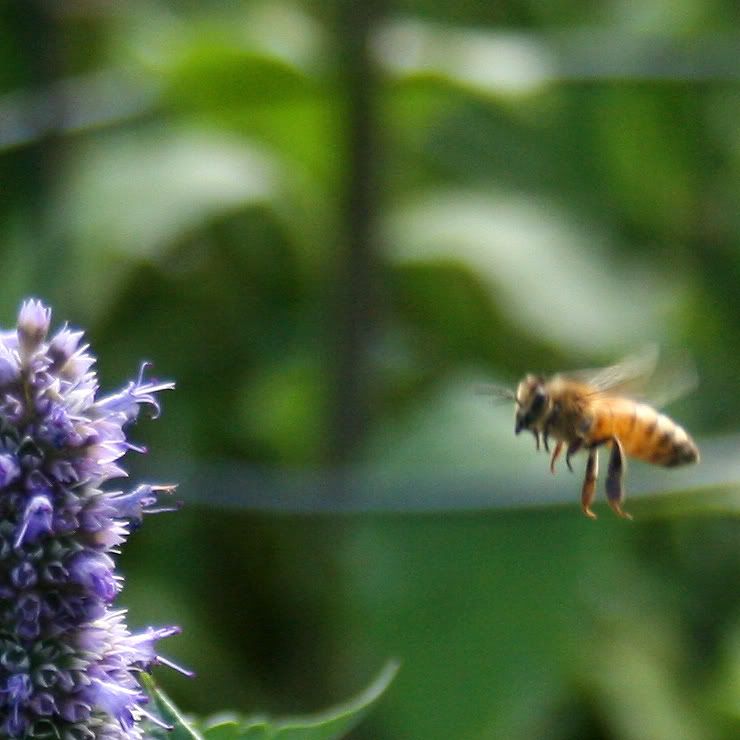
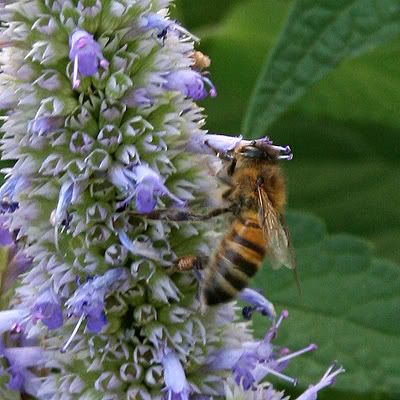
Later in the summer, the anise hyssop, also known as agastache, is buzzing with hundreds of bees. The lavender, daylilies, sunflowers, dahlias, salvias and many other flowers are also thick with bees.
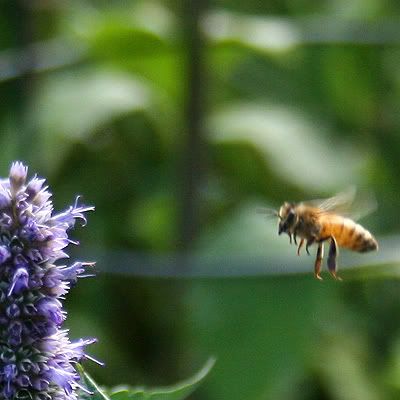
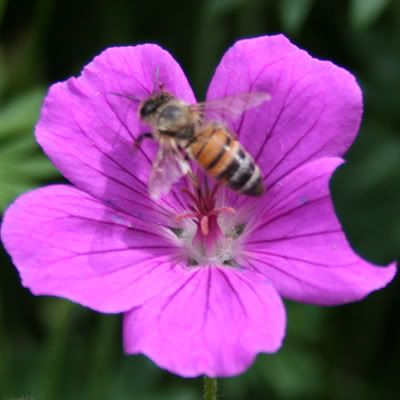


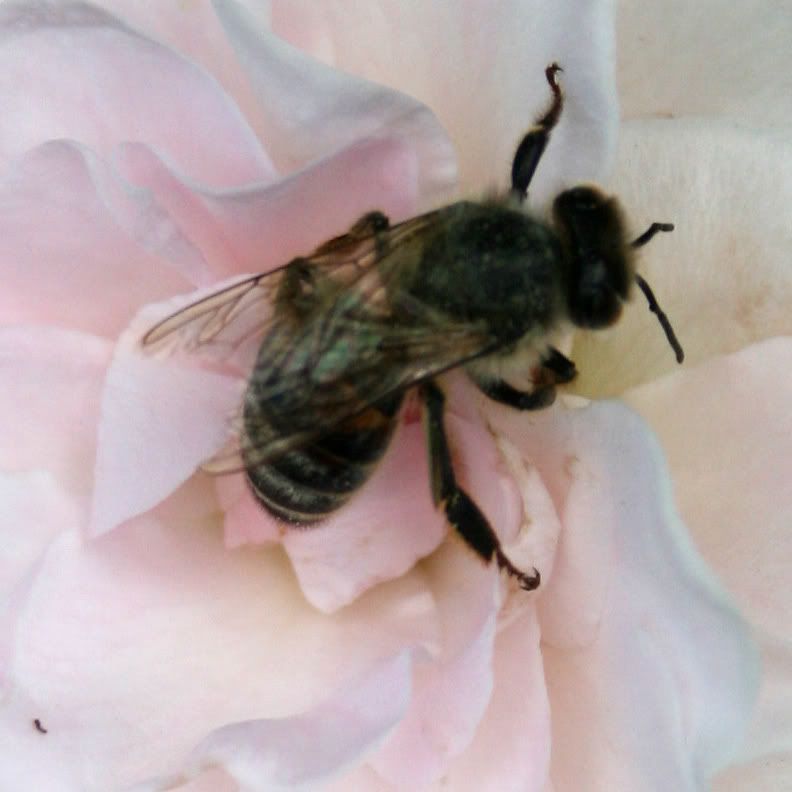
There also seems to be some very dark, or black honeybees visiting the flowers. Are these a different species of bee or just a color variation?
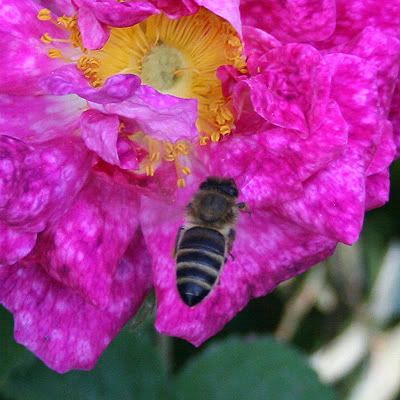


There are bees coming to the gardens into the late fall, drawn to the flowers of the sedums and the last hurrah of the repeat blooming hybrid teas and miniature roses.
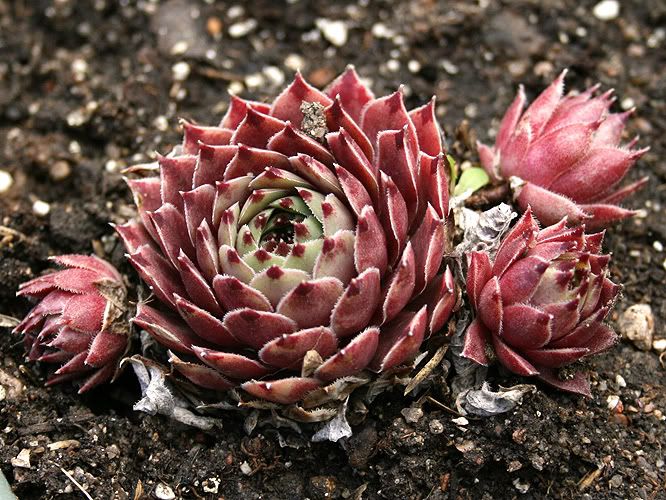
All in all, there are a lot of bees in the gardens. Later, I'll post about the native bees and other pollinators in the gardens as there are a lot of them too.
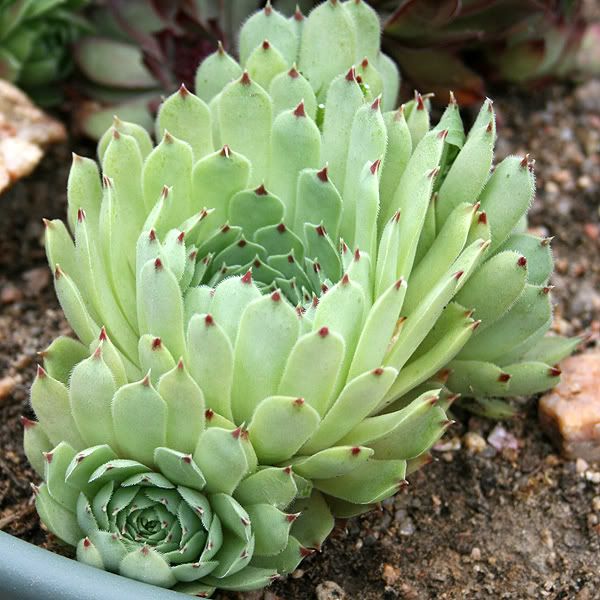
Next spring there may be even more bees in the garden since some bee keeping friends are considering putting some hives out back near the fruit trees.