


Showing posts with label honeybees. Show all posts
Showing posts with label honeybees. Show all posts
Saturday, November 29, 2014
Ice Plant is Blooming and the Bees are Out
Today is a lovely day. The sun is shining and the temperature is in the upper sixties. Just two weeks ago the temperature was minus 10, so I was surprised to see anything growing, never mind blooming. But there are at least three varieties of ice plant blooming and the bees have found them. 

Monday, August 11, 2014
Extracting Honey
 |
| Honey Extraction |
Taking the supers and honey frames off the hives was pretty exciting in itself as the bees don't really like their hard earned winter food supply being taken from them. We smoked the bees a little to calm them down and used Bee Quick to chase them down out of the supers and into the lower deep boxes. It worked sort of well, but would've worked better if the weather had been warmer and sunnier. As it was, we got 3 supers and 25 frames full of honey off of the hives. Most of this came off the two older hives. We didn't get much of anything off the 3 hives that are new this year, but we didn't expect to.
 |
| Frame Before Uncapping |
 |
| Frame After Uncapping |
 |
| 12 Frame Extractor |
 |
| Extractor and Honey Bucket |
 |
| Bucket of Honey! |
 |
| Bucket with Honey Gate |
 |
| Honey! |
Sunday, March 31, 2013
Bringing in the Pollen
Today was a lovely warm sunny day. It was a great day for working in the yard, not only for me, but also for the industrious creatures out in the back of the yard. The bees were out collecting pollen to feed their young. I hope this means the queen is laying well and they're gearing up for all the apple blossoms that will be out in a few weeks. One week ago I saw white pollen coming in from the maple tree, but now the pollen is dark yellow to orange and looks very much like the pollen in all the crocus blossoms in the yard.
Thursday, March 7, 2013
The Bees are Out and About!

Today was a glorious warm sunny day - one of the best we've had so far this year. The sun was out, the temperature was warm and the wind was fairly calm. The sun shown on the fronts of the bee hives, warming them up and letting light into the tiny little front doors. The bees, who have been clustered inside keeping warm most of the time this winter, came out for some flying time and to relieve themselves. There are now lots of little brown spots all over the area near the hives. There was also the chore of carrying out the dead. Bess don't live very long and some die in the hive during the winter and these corpses need to be carried out of the hive and dumped. Normally the dead bee is carried off a distance from the hive, but when it's quite chilly out, the body will get dumped just off the hive landing.
The bees were also flying about looking for anything tasty, so I put out some broken up honey comb I had stored. After finding the sticky sweet wax, some bees went back to the hive to report their find by doing the happy waggle bee dance on the front of the hive. The excited bee would dance around in a figure eight while waggling its butt. Through out the day, the bees worked hard to clean the honey off the wax. Once they've gotten all the honey out of this wax that they can, I'll use it for making beeswax candles.

Today I also saw my very first flower of the year - iris reticulata.

I'm surprised a bee wasn't on it. It's the only flower I saw anywhere today. Yet some bees found enough pollen from somewhere to fill their little pollen baskets and bring it back to the hive. Look at the bulges on the hind leg of one of the bees entering the hive in this picture.

Friday, November 2, 2012
Bee Town USA: An Educational Tiny Town of Beehives
 |
| Honeybee - Apis melifera photo by C. Netter |
Saturday, August 18, 2012

Wednesday, August 15, 2012
Thirsty Bees


Fortunately for the bees in the back of my yard, I have several water gardens. The bees can stand on the edge of water lily pads to suck up water. There is also the "bird bath" I put out years ago, which has become a major watering hole for bees. On hot days there is quite a line up all along the edge. I put rocks in it to help bees get out if they fall in. Bees are very poor swimmers and drown rather quickly if they can't get a hold of something to pull themselves out.

This watering hole is a great place to see the variety of honey bees from the hives out back and from other places in the surrounding area. Some are the typical golden honey bee with tan fur and some are quite dark with grey fur like the one below. The bee on the left above is almost entirely black.

Thursday, August 9, 2012
What a Sticky Mess


Tuesday, July 31, 2012
Bees Dancing on the Front Porch
Saturday, July 14, 2012
The Anythink Library Bee Cam
Greg, the Beekeeper, just sent me a link to the Anythink Library Bee Cam. He has two hives at the Commerce City, Colorado location and the library put a video camera on these hives.
http://beecam.anythinklibraries.org/view/index.shtml
Not only can you view the hives in real time, you can control the camera by zooming in, tilting it up and down as well as panning right to left. You can watch the bees as they enter and leave the hives. Very bee geeky.
http://beecam.anythinklibraries.org/view/index.shtml
Not only can you view the hives in real time, you can control the camera by zooming in, tilting it up and down as well as panning right to left. You can watch the bees as they enter and leave the hives. Very bee geeky.
Saturday, June 30, 2012
Billions of Buzzing Bees
It's probably only thousands of bees, but it looks like a lot to me. I just put out a fresh pan of honey comb for the bees to clean up. This time I smashed it up really well before putting it out so the bees could do a good job of getting the honey out. Once they are done with it, I'll melt the comb down, filter it, and use it for candles.
Sunday, June 17, 2012
The Solar Beeswax Melter
Recently, the beekeeper who has hives in my yard brought over some comb for the bees to clean up. The bees eagerly went to work cleaning the honey off this sticky wax.

After they were done with it, I put some of this wax in my solar wax melter to melt and filter the comb and hopefully end up with nice clean beeswax. I had all the parts to make this solar wax melter so it cost me nothing. It's made from a large Styrofoam box that my medicine comes in, a piece of plexiglass that was laying around, some nylon door screen that was also laying around, a piece of paper towel to filter the wax and a bungee to hold the plexiglass on.
First, some water was put into the Styrofoam box, after which the door screen was put across the top of the box and held in place with sewing pins. After that, I laid a paper towel on the screen and put the messy comb on that. Finally, the plexiglass was placed on top and held in place with the bungee cord. The box was placed in full sun and allowed to sit there all day. When the wax melted through the paper towel, it dripped through and fell into the water, where it hardened. The wax floated to the top and any honey still in the comb sunk to the bottom. Later the next morning, when it had all cooled down, I scooped the wax out using a little fine mess strainer.
Here is the fresh, unmelted comb:

Here is what's left, a day later. All brown stuff is junk I don't want in the beeswax. But I saved this dirty waxy paper towel to use as a fire starter for when we want a fire in the back porch fire pit.

And here is the nice clean wax that I will use to make candles with:


After they were done with it, I put some of this wax in my solar wax melter to melt and filter the comb and hopefully end up with nice clean beeswax. I had all the parts to make this solar wax melter so it cost me nothing. It's made from a large Styrofoam box that my medicine comes in, a piece of plexiglass that was laying around, some nylon door screen that was also laying around, a piece of paper towel to filter the wax and a bungee to hold the plexiglass on.
First, some water was put into the Styrofoam box, after which the door screen was put across the top of the box and held in place with sewing pins. After that, I laid a paper towel on the screen and put the messy comb on that. Finally, the plexiglass was placed on top and held in place with the bungee cord. The box was placed in full sun and allowed to sit there all day. When the wax melted through the paper towel, it dripped through and fell into the water, where it hardened. The wax floated to the top and any honey still in the comb sunk to the bottom. Later the next morning, when it had all cooled down, I scooped the wax out using a little fine mess strainer.
Here is the fresh, unmelted comb:

Here is what's left, a day later. All brown stuff is junk I don't want in the beeswax. But I saved this dirty waxy paper towel to use as a fire starter for when we want a fire in the back porch fire pit.

And here is the nice clean wax that I will use to make candles with:

Monday, June 11, 2012
Bee Hives in the Yard

The following week on May 26 the little yellow hive in the front of the picture above show up with a newly captured swarm inside. He showed us how to make sugar water for the bees to give them a start until they have made comb inside the hive. We took a video of them their first morning:
Hive video
On June 3, two more hives showed up. The first one contained bees from a wild hive removal from a home and the second one contained a very large swarm. June 4, another hive showed up with a medium sized swarm in it. June 8, the fifth hive showed up with another wild hive removal from a home.
I hope the bees do well in their new home.
Monday, November 22, 2010
Backyard Pollinators: Honeybees
The days are getting so short and the nights long right now near Denver, Colorado. It's cold and windy outside, the trees are bare and the gardens give the appearance of being dead.
This is a good time to go through all the pictures taken during the summer months and see what I actually got. During the spring, summer and fall, when the gardens are full of life, I take many pictures of the flowers, plants and bugs. I go through these photo albums multiple times during the winter, each time seeing different things that grab my interest.
Today, the bugs in the photos captured my interest. More specifically, the pollinators. But, since there are many pollinators in my photos, I'm first just going to focus on the most common ones in the pictures - the honeybees.
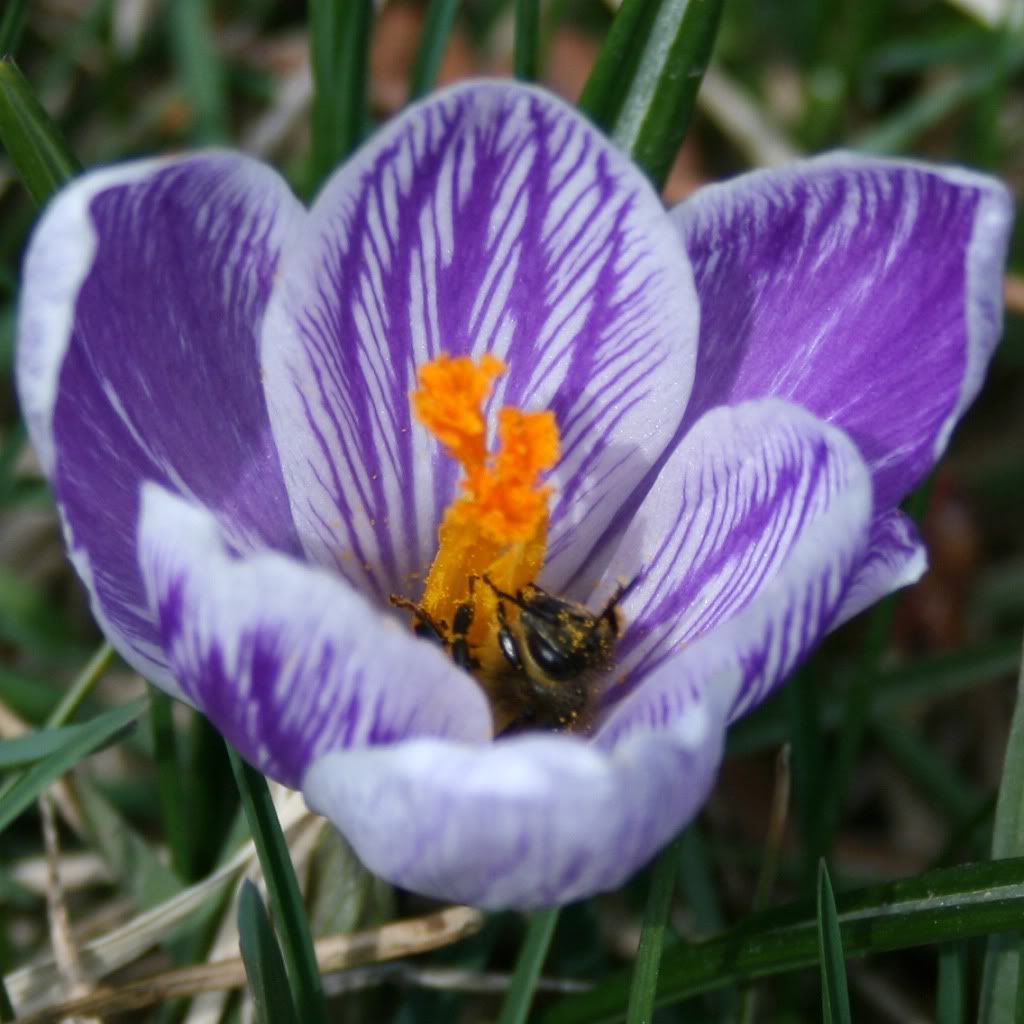
Honeybees seem to really like my yard. Is it because there are flowers blooming constantly from early spring until late fall? I think this is probably so, plus I have multiple water gardens to provide water as well. As soon as there is a crocus blooming in spring, there is a bee in it.
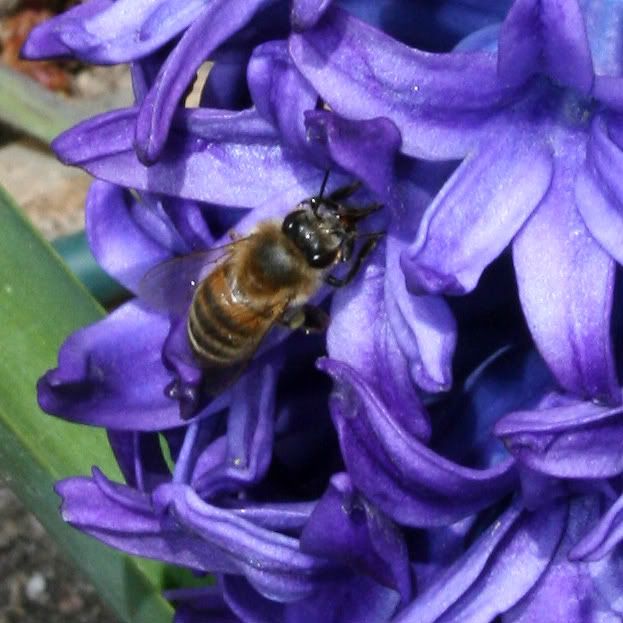
A little later, the hyacinths, tulips, daffodils and other spring bulbs are full of honeybees:
Later in the spring, all the fruit tree bloom and are so full of bees the trees seem to be humming. But sometime after that, the roses start to bloom.
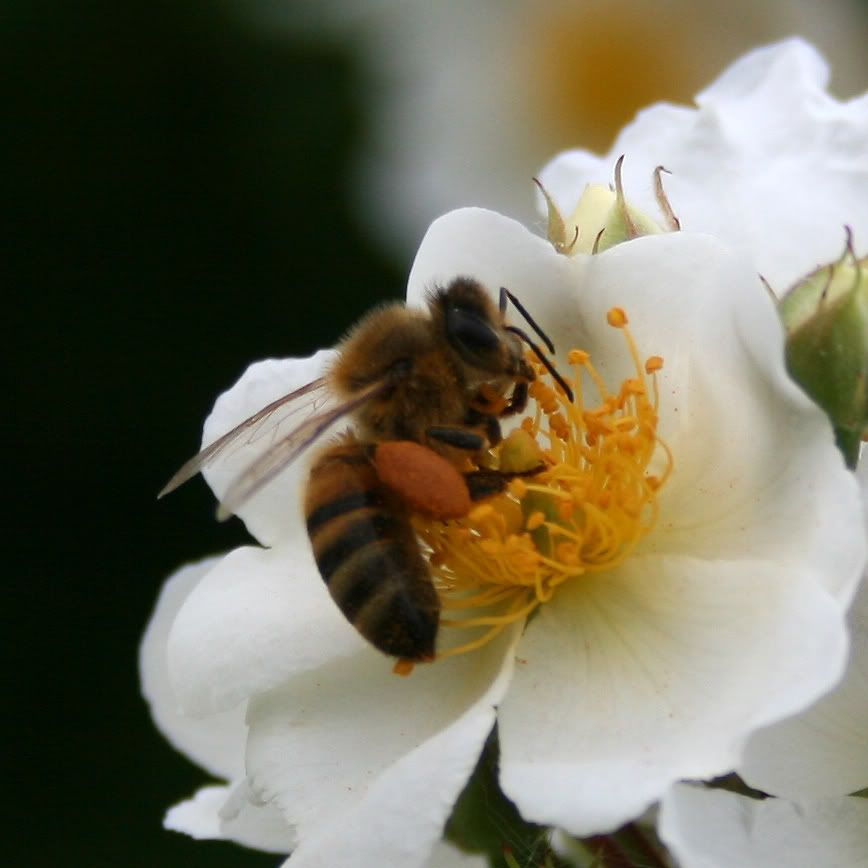
There are over 400 roses in the yard and many thousands of blooms. The above picture is most likely of the rose Darlow's Enigma.
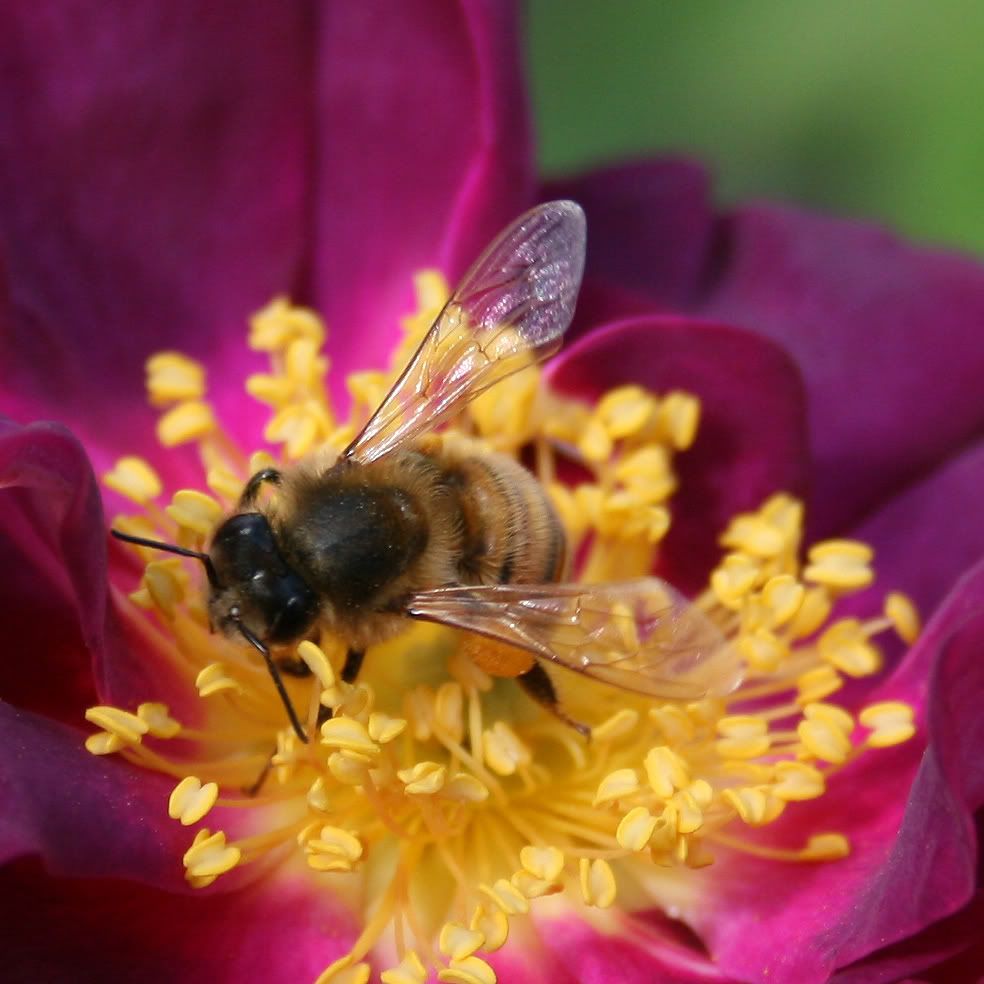
Here is a photo of a bee busy in one of my dark red gallica roses. This is a particularly clear image of the bee, especially in the larger photo where even the hairs on the bee's head, thorax, abdomen, and legs can be seen.

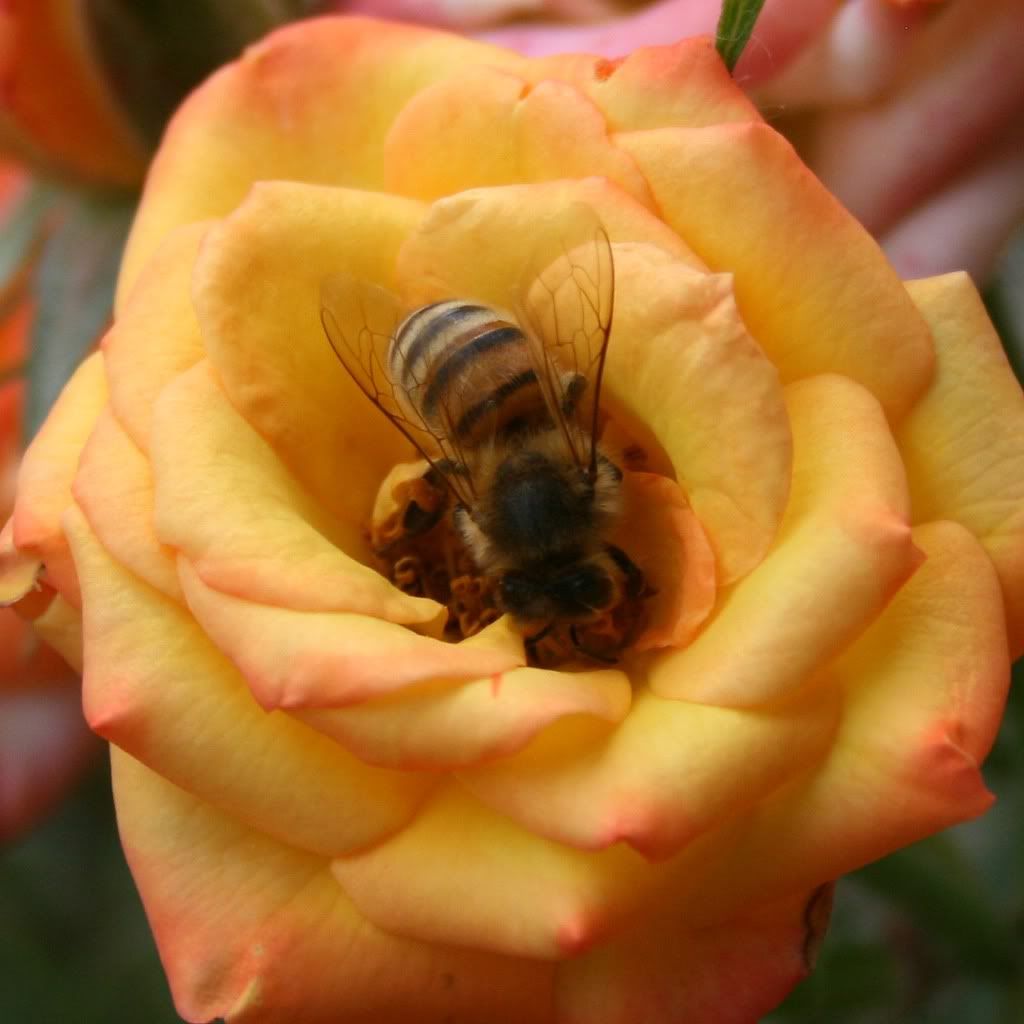
As the summer continues on, the bees search out the blooms on the petite, but repeat blooming miniature roses.
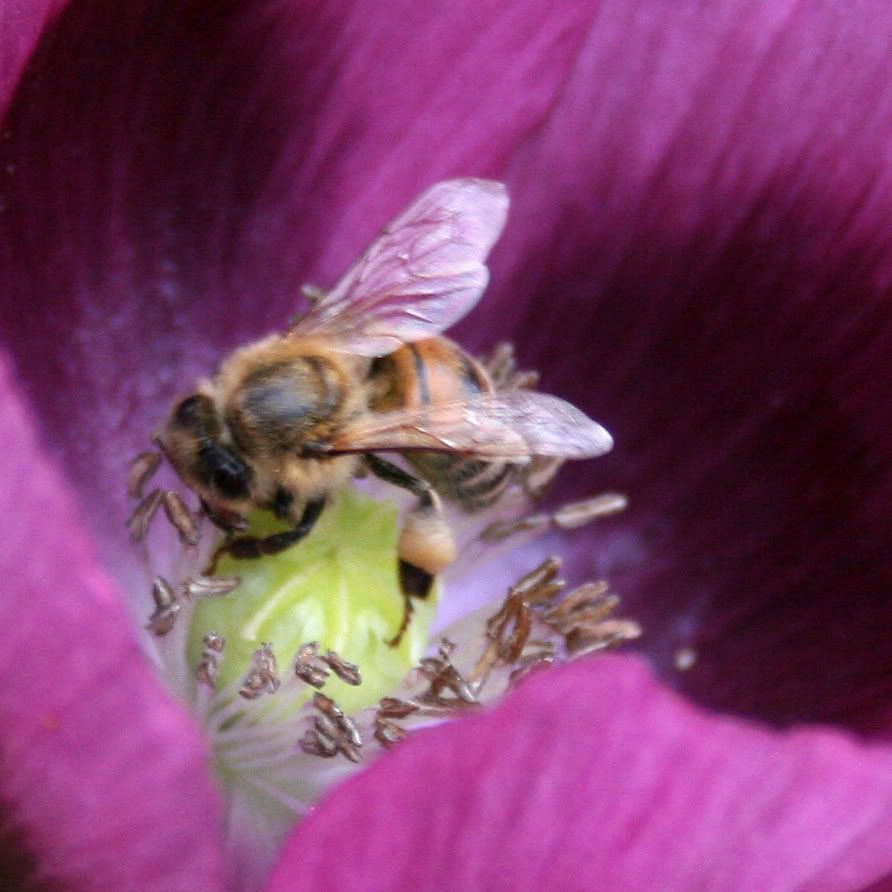
The poppies attract many honeybees.
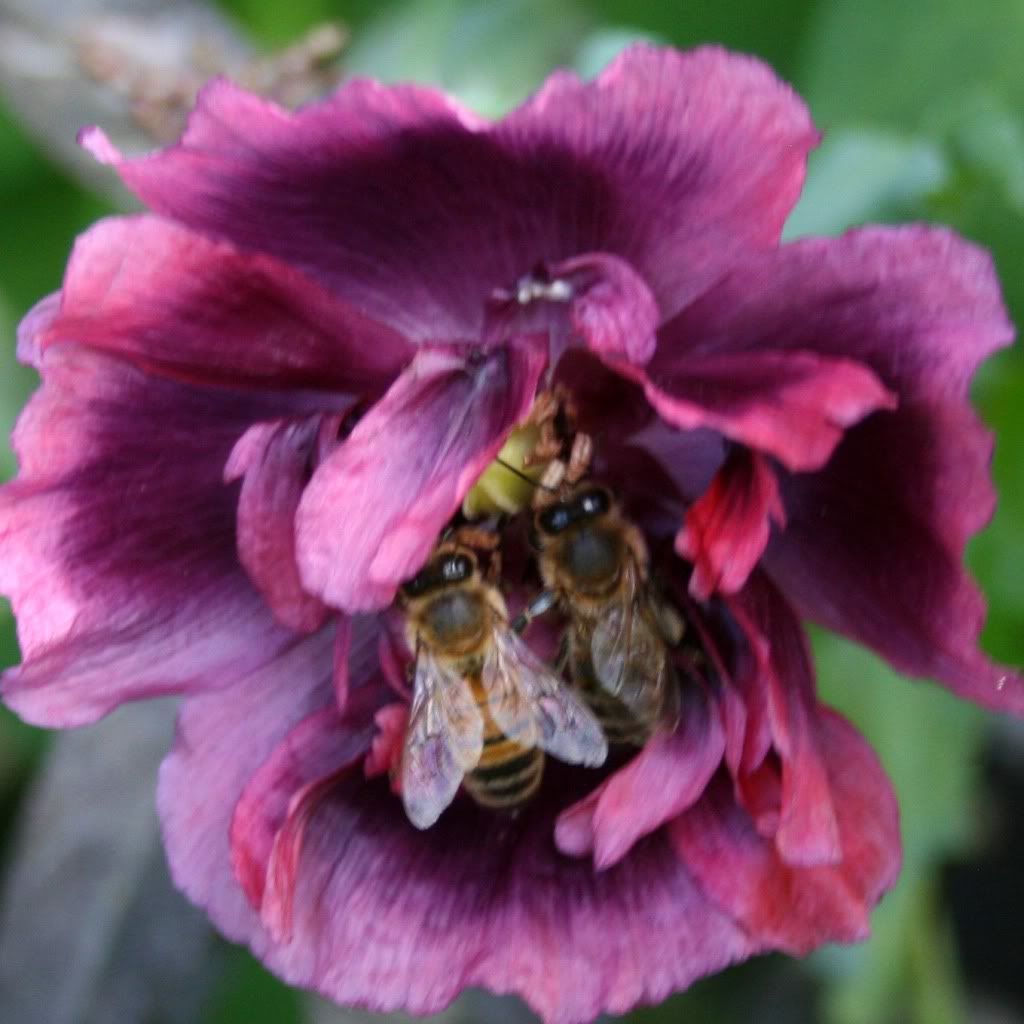
Some share a flower. These two bees in this flower look different to me, although they both spent quite a lot of time in there without any squabbling. Are they from different hives or is one older than the other?
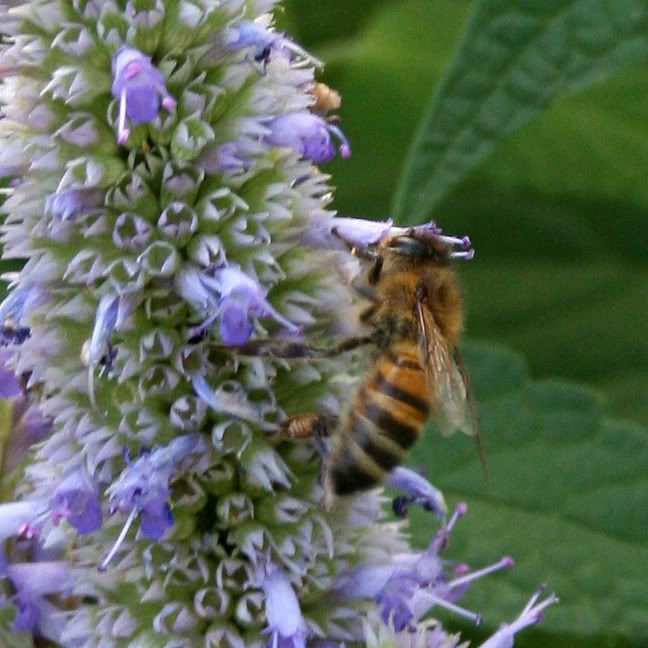
Later in the summer, the anise hyssop, also known as agastache, is buzzing with hundreds of bees. The lavender, daylilies, sunflowers, dahlias, salvias and many other flowers are also thick with bees.
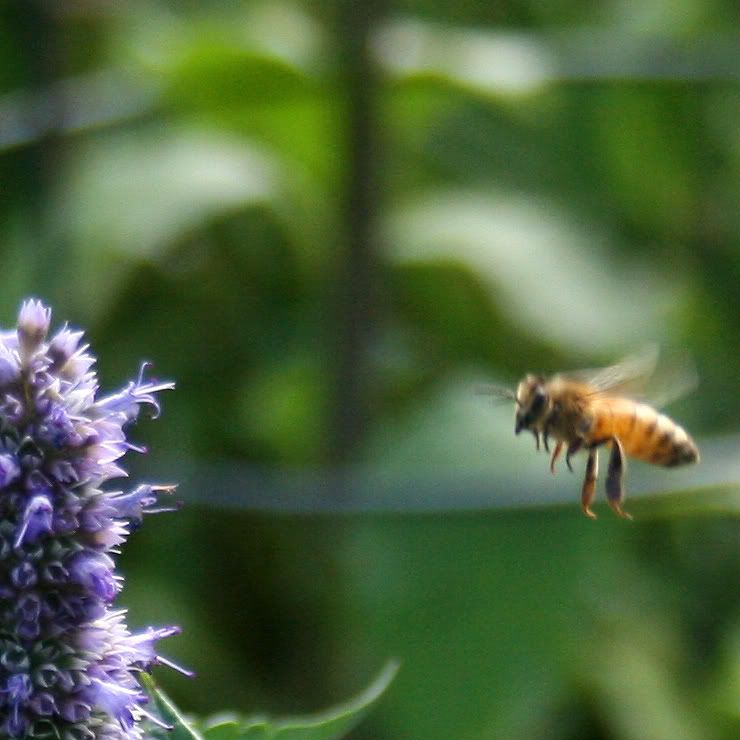
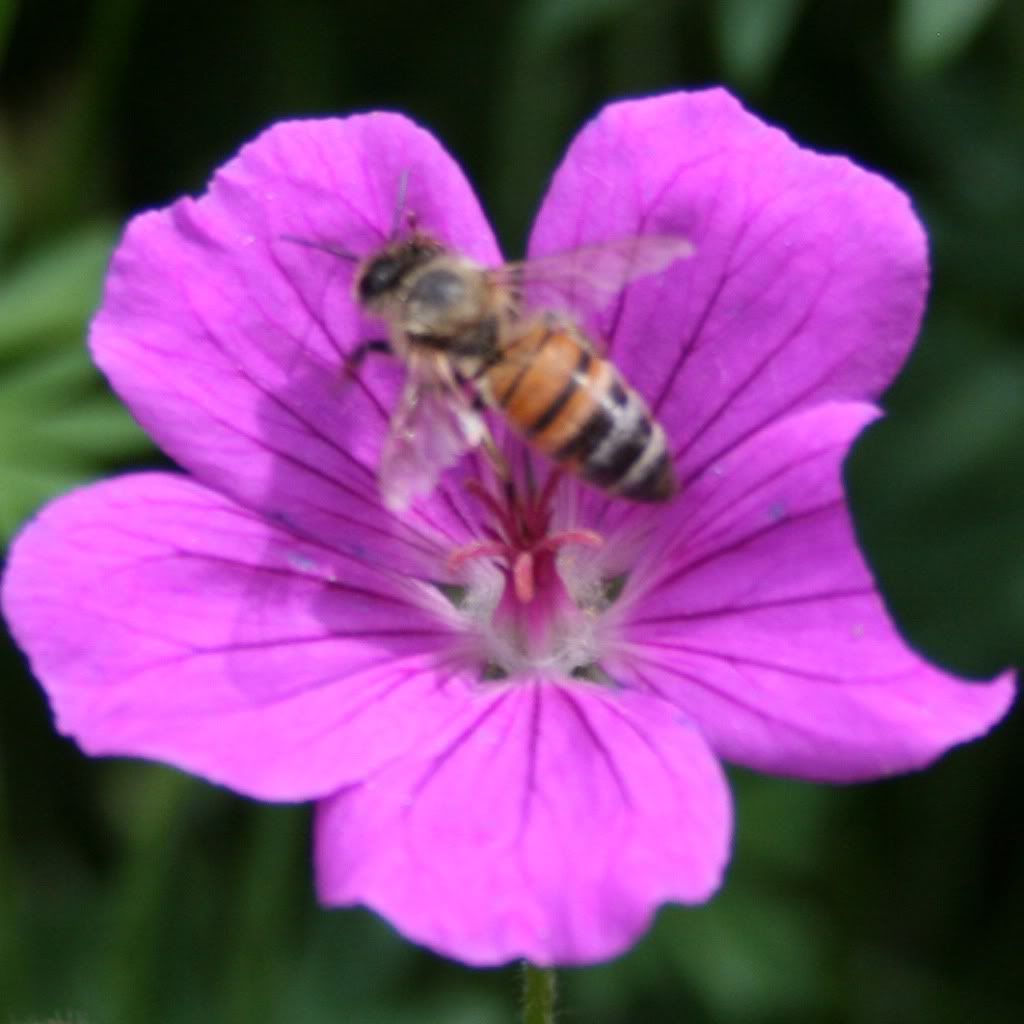
There also seems to be some very dark, or black honeybees visiting the flowers. Are these a different species of bee or just a color variation?
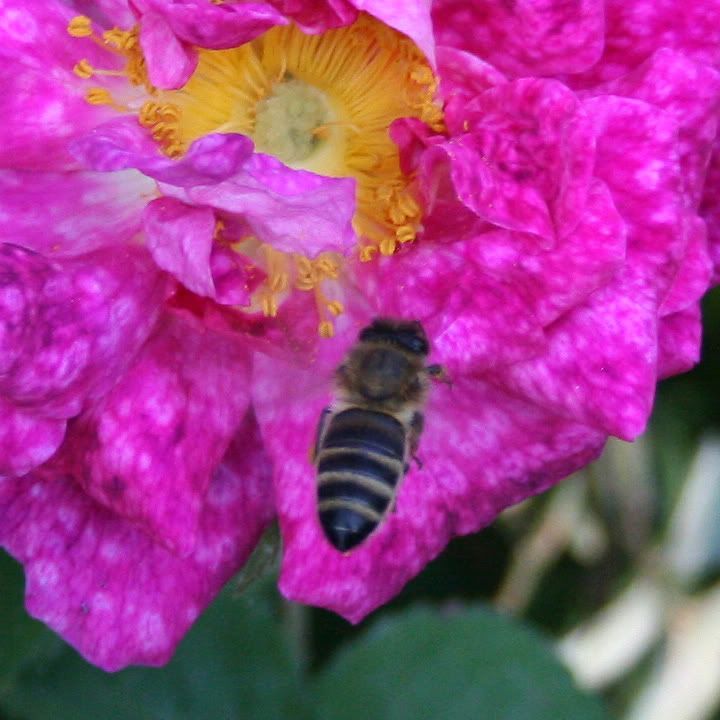
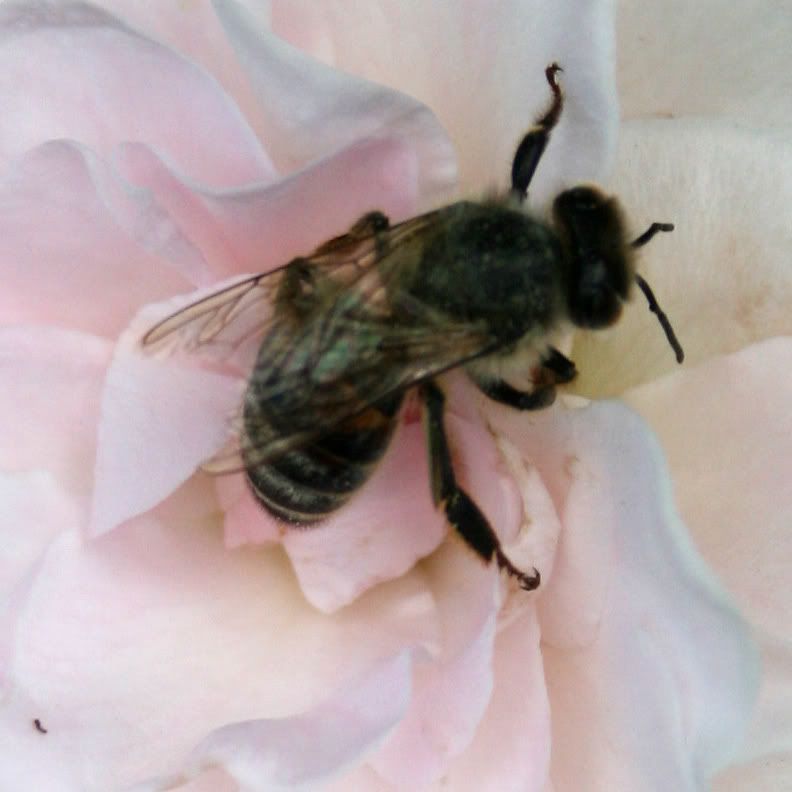
There are bees coming to the gardens into the late fall, drawn to the flowers of the sedums and the last hurrah of the repeat blooming hybrid teas and miniature roses.
All in all, there are a lot of bees in the gardens. Later, I'll post about the native bees and other pollinators in the gardens as there are a lot of them too.
Next spring there may be even more bees in the garden since some bee keeping friends are considering putting some hives out back near the fruit trees.
Subscribe to:
Posts (Atom)


