Tuesday, June 19, 2012

The Beekeeper Inspects His Hives

Today the beekeeper came over to see how the hives are doing. I stood back and took lots of pictures which can be seen in this slide view:


Some of the comb is held in the frames by chicken wire.  This comb came from the original hive that was removed from somebody's house and the chicken wire holds it in place until the bees have glued it into the frames with more wax. When the comb is sufficiently fixed into the frames by the bees, the beekeeper removes the chicken wire.

Some of these hives came from swarms and some from hive removals from buildings. So far, they all are making brood, which is a good sign.

Sunday, June 17, 2012

The Solar Beeswax Melter

Recently, the beekeeper who has hives in my yard brought over some comb for the bees to clean up. The bees eagerly went to work cleaning the honey off this sticky wax.

After they were done with it, I put some of this wax in my solar wax melter to melt and filter the comb and hopefully end up with nice clean beeswax.  I had all the parts to make this solar wax melter so it cost me nothing. It's made from a large Styrofoam box that my medicine comes in, a piece of plexiglass that was laying around, some nylon door screen that was also laying around, a piece of paper towel to filter the wax and a bungee to hold the plexiglass on.

First, some water was put into the Styrofoam box, after which the door screen was put across the top of the box and held in place with sewing pins. After that, I laid a paper towel on the screen and put the messy comb on that.  Finally, the plexiglass was placed on top and held in place with the bungee cord. The box was placed in full sun and allowed to sit there all day. When the wax melted through the paper towel, it dripped through and fell into the water, where it hardened. The wax floated to the top and any honey still in the comb  sunk to the bottom. Later the next morning, when it had all cooled down, I scooped the wax out using a little fine mess strainer. 

Here is the fresh, unmelted comb:

Here is what's left, a day later. All brown stuff is junk I don't want in the beeswax. But I saved this dirty waxy paper towel to use as a fire starter for when we want a fire in the back porch fire pit.

And here is the nice clean wax that I will use to make candles with:


Friday, June 15, 2012

Strawberries!


Fresh picked organic strawberries from the garden.We've been getting about this amount  per day for the last week. Yum!

Thursday, June 14, 2012

Native Bees of Colorado

I knew that there were native bees, but I didn't know there were so many native bees until Greg, of Dakota Bees, told me. There are four thousand species of bee in North America. So, I started looking at my blooming plants and noticed that there were many bees other than honey bees. Many of the native bees are very tiny.

Here's teeny one. It's a small carpenter bee, Ceratina, on the flower of Centaurea. Look at all the white pollen on it's leg.

To show how tiny it is, here it is with a honey bee:

Another tiny one is this sweat bee, Halictus:

Here it is with some honey bees to compare with.

On the opposite side of the scale are the Bumble Bees. Here is a biggy, Bombus nevadensis, having trouble getting into Penstemon strictus otherwise known as Rocky Mountain penstemon.

A much smaller bumble bee is the brown belted bumble bee, Bombus griseocollis, here in my spotted gallica rose:

Here is a ground bee, Anthophora bomboides, with an amazing mouth:

This is a leaf cutter bee. I've seen plenty of it's workmanship on my roses, but hadn't seen the culprit until now. Lithurgus apicalis:

More Rose Photos from my Colorado Garden

And the parade of roses continues....

William Lobb - a big sprawly purplish once blooming moss rose. The cotton wood cotton is always at peak when my once blooming roses are at their peak. It gets stuck on the moss of this rose.

Scentsational - a fragrant miniature from Nor'east.

Shooting Star is one of my oldest miniature roses.

Spotty is a seedling of Alain Blanchard. Like it's parent, it has spots, but even more so.

Teddy  Bear is another Nor'East miniature with a lovely unusual color.

Tracy Wickham forms these perfect little bi-colored buds on a nice proportional plant. It's one of my favorite miniature roses.

This is an unknown once blooming rose. The blooms are nice and full and very fragrant and the bush is quite big.

Salute is such a bright red mini.

This is another unknown rose.

There are many more rose photos to come.

Wednesday, June 13, 2012

The Roses of 2012

This is a very strange year. The weather was unusually warm in the spring and we didn't get our usual freezes in May. Because of this the roses, which usually peak around summer solstice, peaked around June 1.
They started around May 10. The first to bloom were Father Hugo's Rose, a once bloomer with lovely tiny ferny foliage:

Also blooming this early was Austrian Copper, another once bloomer:

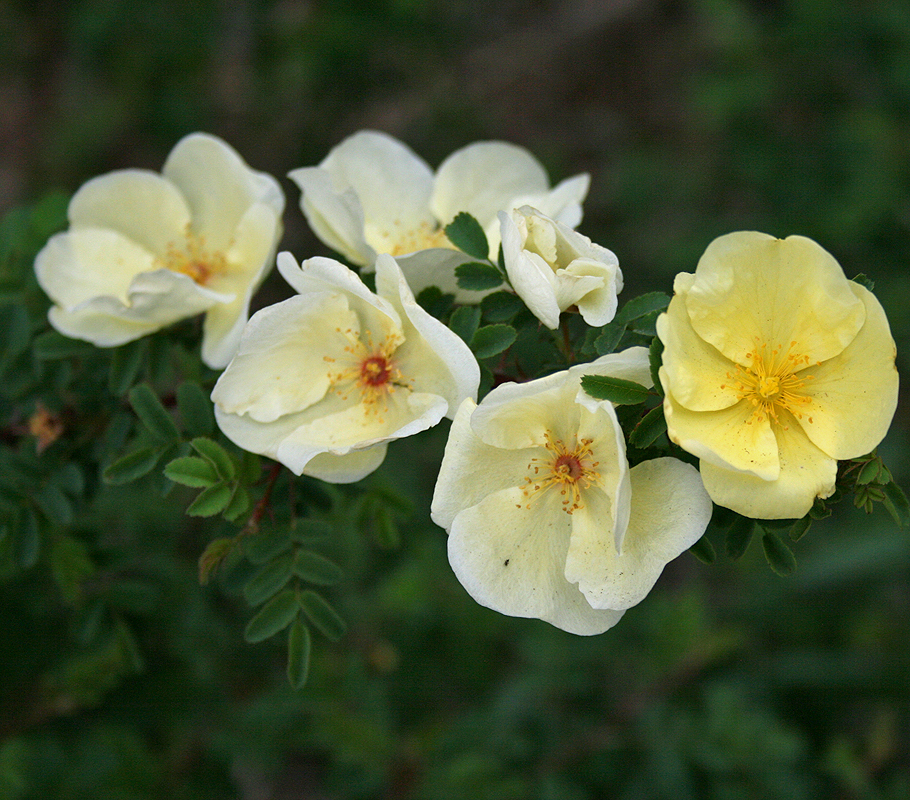
Fruhlingsgold has these lovely large soft yellow blooms with a unusual fragrance.

Harison's Yellow is another early once bloomer. Here it is, totally unpruned, with all the winter killed canes still there.

The Herbalist started blooming a little later. It's a nice fragrant English Rose.

Mary Rose, another English Rose, was planted up near the house which gives it an early start.

Here's a nice branch of Mary Rose:

That's enough for one post. I'll start the next post with roses blooming nearer the end of May.

Monday, June 11, 2012

Bee Hives in the Yard

Back in late May a local beekeeper advertised on Denver's Craigslist that he was looking for places to put his hives in exchange for some of the honey. I've wanted some hives in my yard for some time now so I jumped at the chance and contacted him. Greg, of  Dakota Bees (Dakotabees.com) came out to check out the yard and found lots of flowering plants, plus water gardens that would provide water for the bees so he said he would be happy to put some hives here.  He removes wild hives from people's homes and also captures swarms and puts them into hives.
The following week on May 26 the little yellow hive in the front of the picture above show up with a newly captured swarm inside. He showed us how to make sugar water for the bees to give them a start until they have made comb inside the hive. We took a video of them their first morning:
Hive video
On June 3, two more hives showed up. The first one contained bees from a wild hive removal from a home and the second one contained a very large swarm. June 4, another hive showed up with a medium sized swarm in it. June 8, the fifth hive showed up with another wild hive removal from a home.
I hope the bees do well in their new home.